
Why Everyone's Talking About Particle Size in Craft Chocolate (And How Your Grinder Matters)
Ever wonder why some craft chocolate melts like silk on your tongue while others feel gritty and rough? The secret isn't just in the beans or the roast, it's hiding in plain sight at the microscopic level.
Welcome to the fascinating world of particle size, where measurements in microns make the difference between "wow" and "meh."
The Micron Magic: What's Actually Happening in Your Chocolate
Here's something most people don't know: the texture of chocolate isn't just about ingredients. It's about how small you can break those ingredients down.
We're talking microns here, one micron is one-millionth of a meter. To put that in perspective, a human hair is about 70 microns thick. Premium craft chocolate? That sweet spot sits between 15-20 microns.
At this size, your tongue can't detect individual particles. The chocolate feels smooth, creamy, and luxurious. Go above 35 microns, and suddenly you're dealing with a grainy, sandy texture that screams "amateur hour."
But here's where it gets really interesting: particle size doesn't just affect texture. It completely transforms how flavors hit your palate.
The Surface Area Secret
Think about crushing a sugar cube versus granulated sugar. Which dissolves faster in your coffee? The granulated sugar wins every time because it has more surface area exposed to the liquid.
The exact same principle applies to chocolate particles.
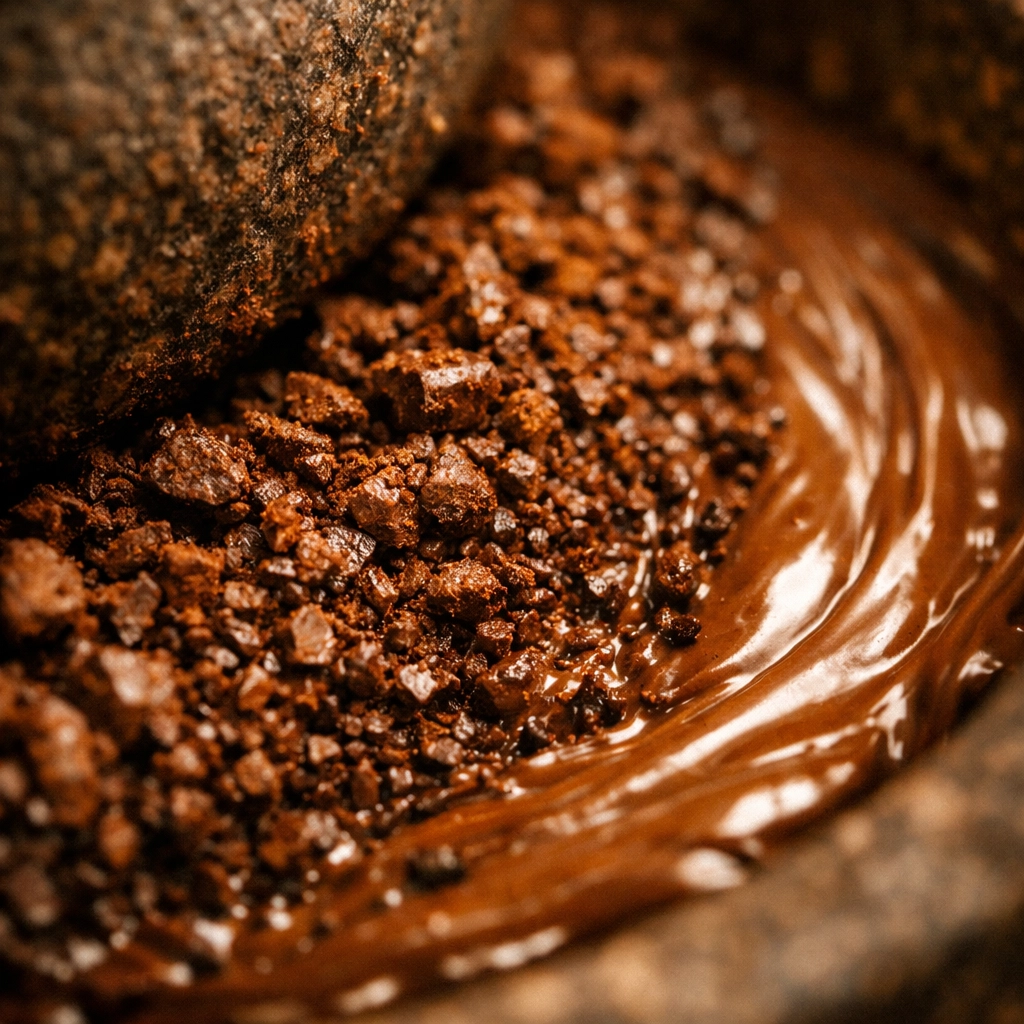
When cocoa and sugar particles are ground to 15-20 microns, they have massive surface area relative to their volume. This means flavors release rapidly and intensely on your tongue. You get that immediate burst of cocoa richness, that quick hit of sweetness, that full-bodied flavor experience craft chocolate is famous for.
Larger particles? They release flavors slowly and unevenly. You might get sweetness first, then cocoa notes later, creating a disjointed tasting experience that lacks the harmonious blend of a well-crafted bar.
This is the science behind why properly refined chocolate tastes so much more complex and satisfying than the mass-produced stuff.
Your Grinder is Your Most Important Tool
So how do you actually control particle size? Simple: your grinding equipment matters more than almost anything else in your chocolate-making setup.
The grinding process is where the magic happens. Cocoa nibs, sugar, and any other ingredients get crushed, refined, and reduced down to those crucial micron measurements. Longer grinding times produce finer particles. Shorter sessions leave you with coarser, grainier results.
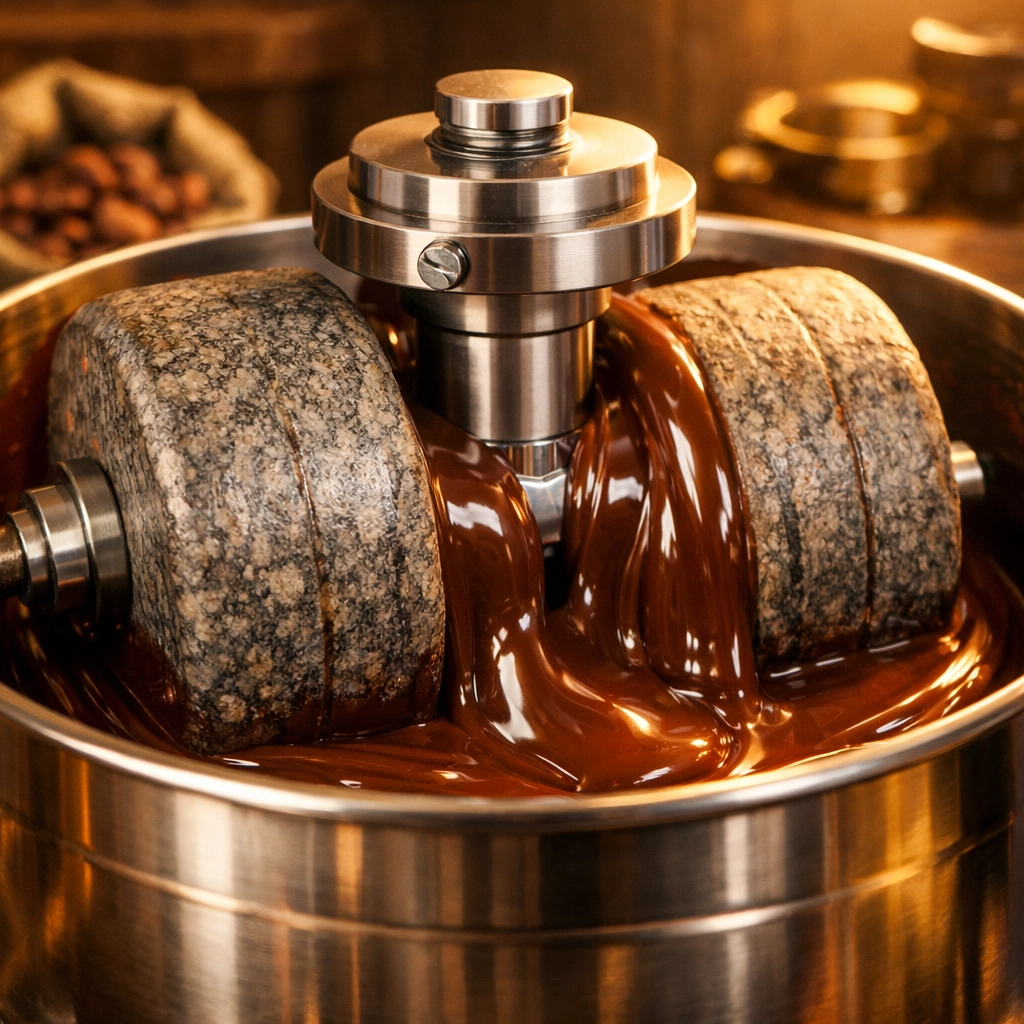
Professional stone grinders are the gold standard for a reason. The grinding stones create consistent, controlled particle reduction while the continuous motion generates gentle heat that helps develop flavors. It's a beautiful marriage of physics and craftsmanship.
But here's the catch: you can't just grind forever and expect perfection.
The Over-Refining Trap
Yes, there's such a thing as too smooth.
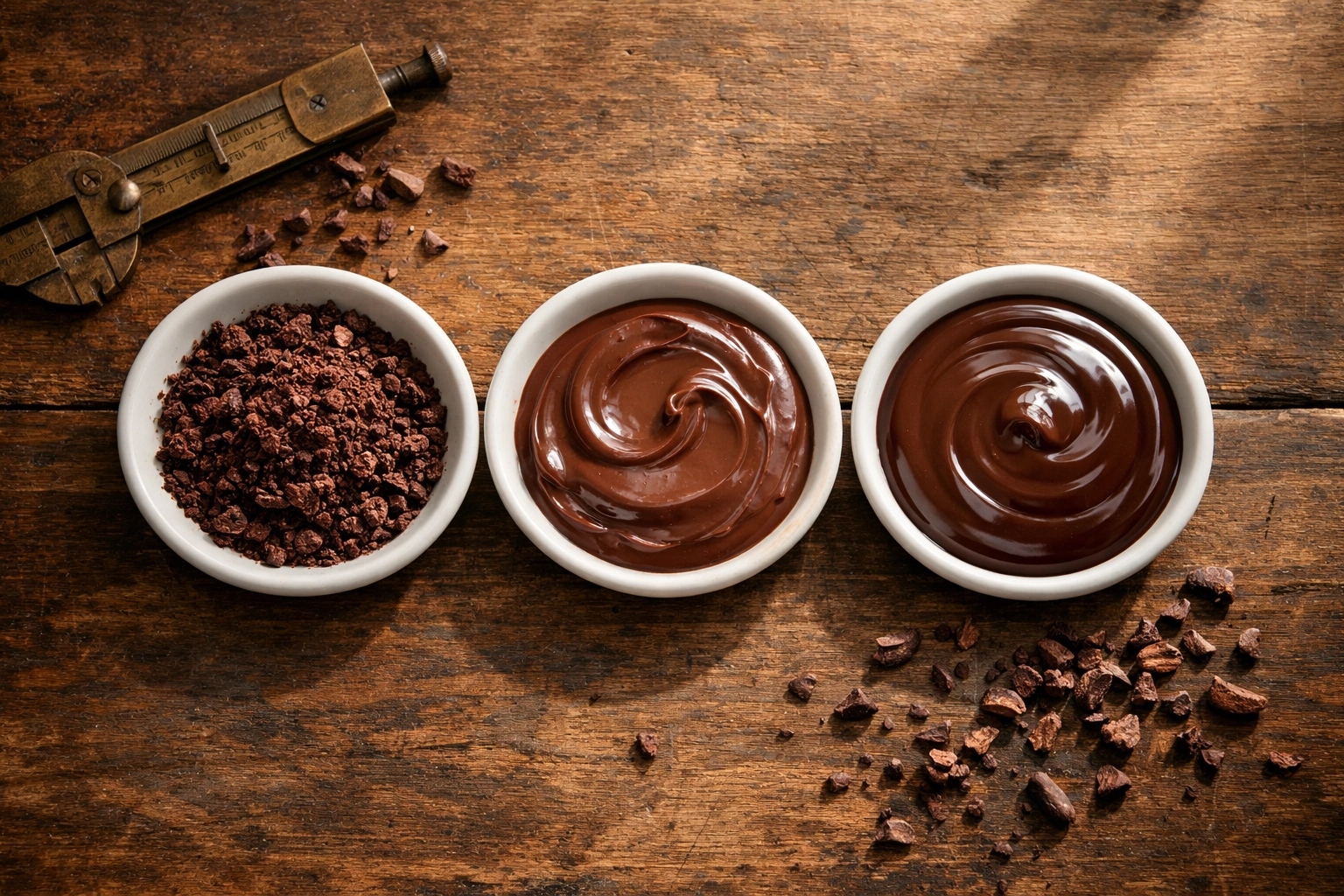
When particles get ground too fine: we're talking below 10 microns: chocolate starts developing some seriously undesirable characteristics. The texture becomes sticky, almost peanut butter-like. The mouthfeel gets dense and heavy instead of light and melt-in-your-mouth. Some makers even report a chalky, powdery taste when they over-refine.
This is why craft chocolate making is an art as much as a science. You need to know when to stop grinding. You need to understand your specific beans, your sugar type, your equipment capabilities. Every batch has a sweet spot, and finding it requires experience, attention, and a lot of tasting.
Want to dial in your own recipes? Our Chocolate Lab gives you access to formulation tools that help you track grinding times, particle sizes, and flavor outcomes. It's like having a professional lab notebook in your pocket.
The Conching Connection
Grinding gets you to the right particle size, but conching takes your chocolate to the next level.
During conching, chocolate is continuously mixed and aerated at controlled temperatures. This process serves multiple purposes: it further refines any remaining larger particles, it evaporates unwanted volatile compounds (goodbye, harsh acidic notes), and it coats every particle with cocoa butter for that signature snap and shine.
The combination of proper grinding to 15-20 microns followed by strategic conching creates the texture and flavor profile that defines exceptional craft chocolate.
Why This Matters for Your Craft
If you're making chocolate at home or launching your own craft brand, understanding particle size changes everything about your approach.
You'll stop wondering why your chocolate doesn't taste as good as the bars you admire. You'll understand that it's not about more expensive beans or exotic origins: it's about how thoroughly you're refining those beans.
You'll realize that investing in quality grinding equipment isn't optional if you want professional results. And you'll learn to taste chocolate differently, recognizing immediately when particle size is off.
This knowledge separates hobbyists from serious makers. It's the difference between "I make chocolate" and "I craft exceptional chocolate."
Getting Started with the Science
Ready to put this knowledge into practice?
Sign up for a free Cocoa Craft account and get access to our complete suite of maker tools. Our Recipe Builder helps you calculate optimal grinding times based on your equipment and batch size. The Formulation Tool lets you experiment with different ingredient ratios while tracking particle size outcomes.
Plus, you'll join a community of makers who geek out over this stuff just as much as you do. Share grinding techniques, troubleshoot texture issues, and learn from makers who've mastered the micron game.
The Equipment Investment
Let's talk real numbers. A professional stone grinder designed for craft chocolate can run anywhere from a few hundred dollars for small-batch home equipment to several thousand for commercial-grade machines.
Is it worth it? Absolutely: if you're serious about quality.
Think about it this way: you can buy the best single-origin beans in the world, roast them perfectly, and nail your winnowing process. But if you're grinding in a food processor or cheap equipment that can't achieve proper particle refinement, you're wasting all that potential.
Your grinder is what transforms good ingredients into great chocolate. It's what gives you control over texture, mouthfeel, and flavor release. It's the tool that separates your chocolate from everyone else's.
Browse our shop for professionally-curated equipment that craft makers actually use. We only stock what we'd use ourselves: no compromises.
The Sweet Spot Formula
Here's what you're aiming for every single batch:
Target: 15-20 microns
Texture: Smooth and creamy, no grittiness
Mouthfeel: Melts evenly on the tongue
Flavor release: Immediate and harmonious
Getting there requires:
- Quality grinding equipment with stone or steel refining surfaces
- Adequate grinding time (often 24-72 hours depending on batch size)
- Temperature control during grinding
- Proper conching technique
- Regular testing and tasting
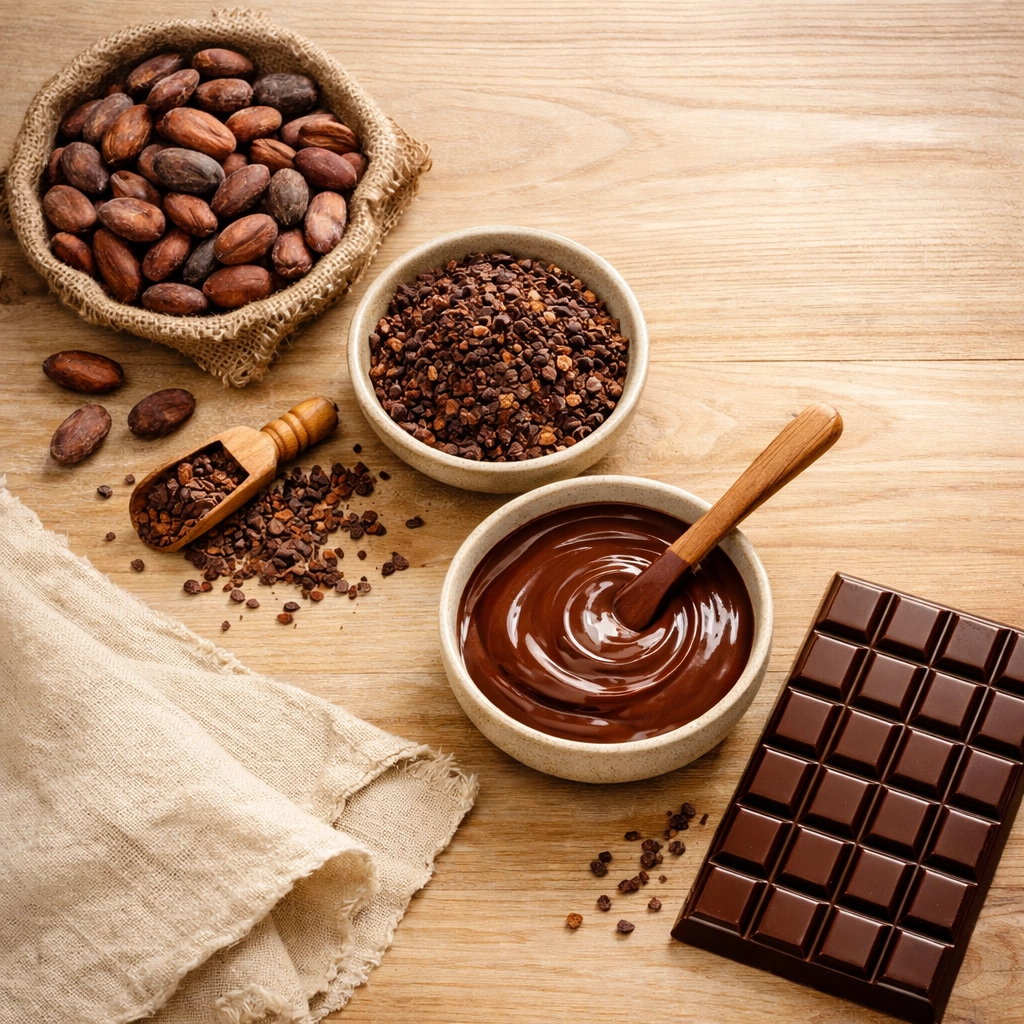
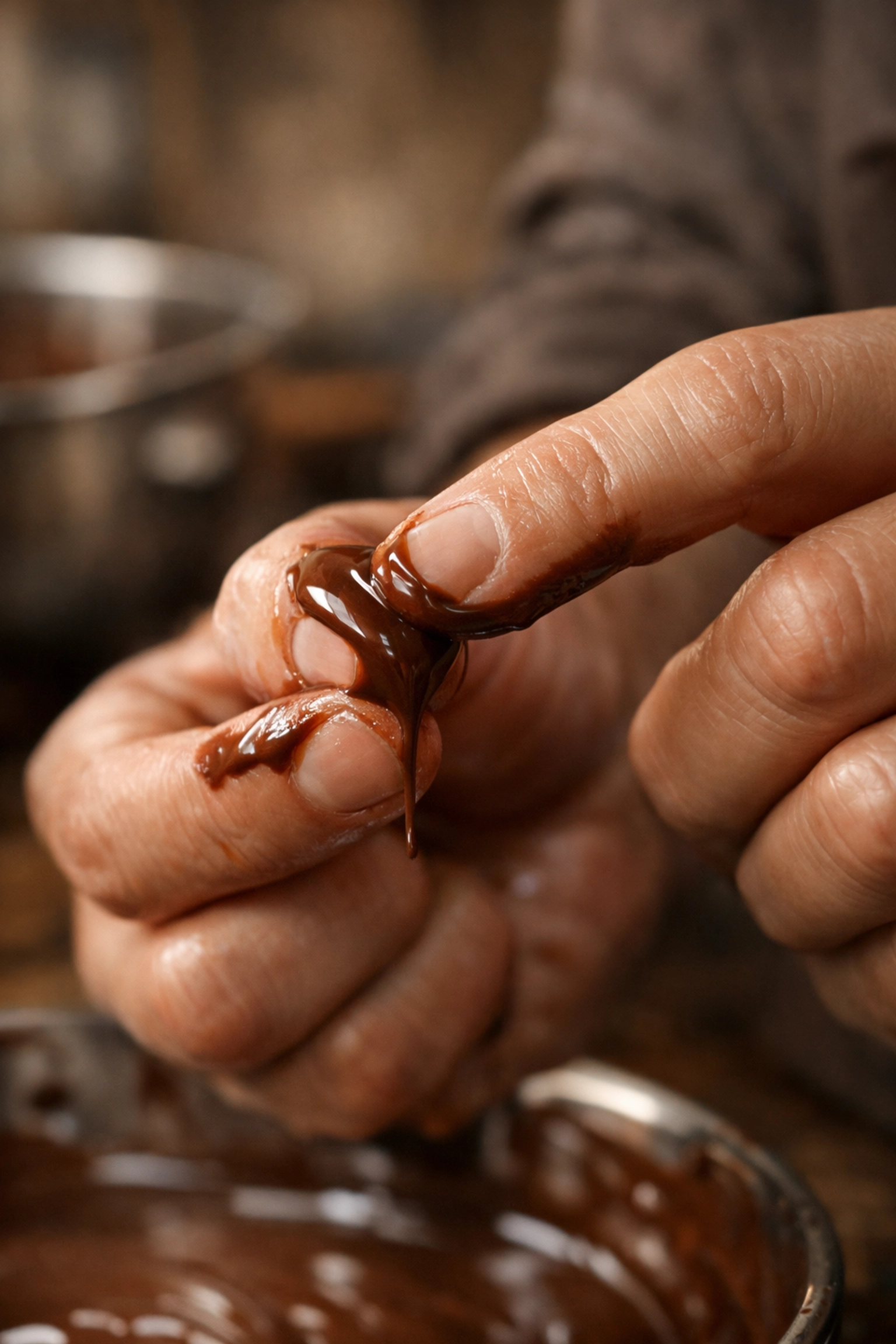
You don't need a lab microscope to check particle size, though it helps. Most makers develop a feel for it through tactile testing: rubbing a small amount of chocolate between their fingers to detect any graininess. Your tongue is also an incredibly sensitive tool. If you can feel individual particles, you're not there yet.
Join the Particle Size Revolution
The craft chocolate movement is raising the bar for what consumers expect from their chocolate. People are learning to taste the difference between mass-produced bars and carefully crafted small-batch chocolate. They're discovering that smooth, complex, properly refined chocolate is worth seeking out and paying more for.
As a maker, understanding particle size puts you at the forefront of this revolution. You're not just following recipes: you're controlling the fundamental physics and chemistry that create exceptional chocolate.
Create your free account today and explore our digital tools designed specifically for craft chocolate makers. Track your grind times, document your particle size results, experiment with our Recipe Builder, and connect with makers who are pushing the boundaries of what's possible.
The difference between good chocolate and extraordinary chocolate often comes down to a few microns. Now you know the secret. What are you going to make with it?