
Why Artisan Chocolate Makers Are Switching to Precision Stone Grinding (And You Should Too)
There's a quiet revolution happening in chocolate workshops around the world. From Brooklyn to Brussels, artisan makers are ditching conventional processing methods and returning to an ancient technique: with a modern twist. Stone grinding, once the domain of traditional chocolate houses, has been reimagined with precision engineering to create what many consider the finest chocolate ever produced.
But why? What makes this centuries-old method suddenly the hottest topic in craft chocolate circles?
The answer lies in science, flavor, and the pursuit of perfection. Let's dive into the fascinating world where granite meets cacao and discover why precision stone grinding isn't just a trend: it's a fundamental shift in how we think about chocolate quality.
The Particle Size Revolution
Here's where things get microscopic: and mind-blowing.
When you taste truly exceptional chocolate, what you're actually experiencing is a masterclass in particle physics. The human tongue can detect particles as small as 20-30 microns. Anything coarser feels grainy. Anything finer? Pure silk.
Precision stone grinding consistently achieves particle sizes below 15 microns: sometimes as fine as 10 microns. That's smaller than a single human blood cell! This isn't just impressive trivia; it's the difference between chocolate that melts like velvet on your tongue and chocolate that feels sandy or chalky.
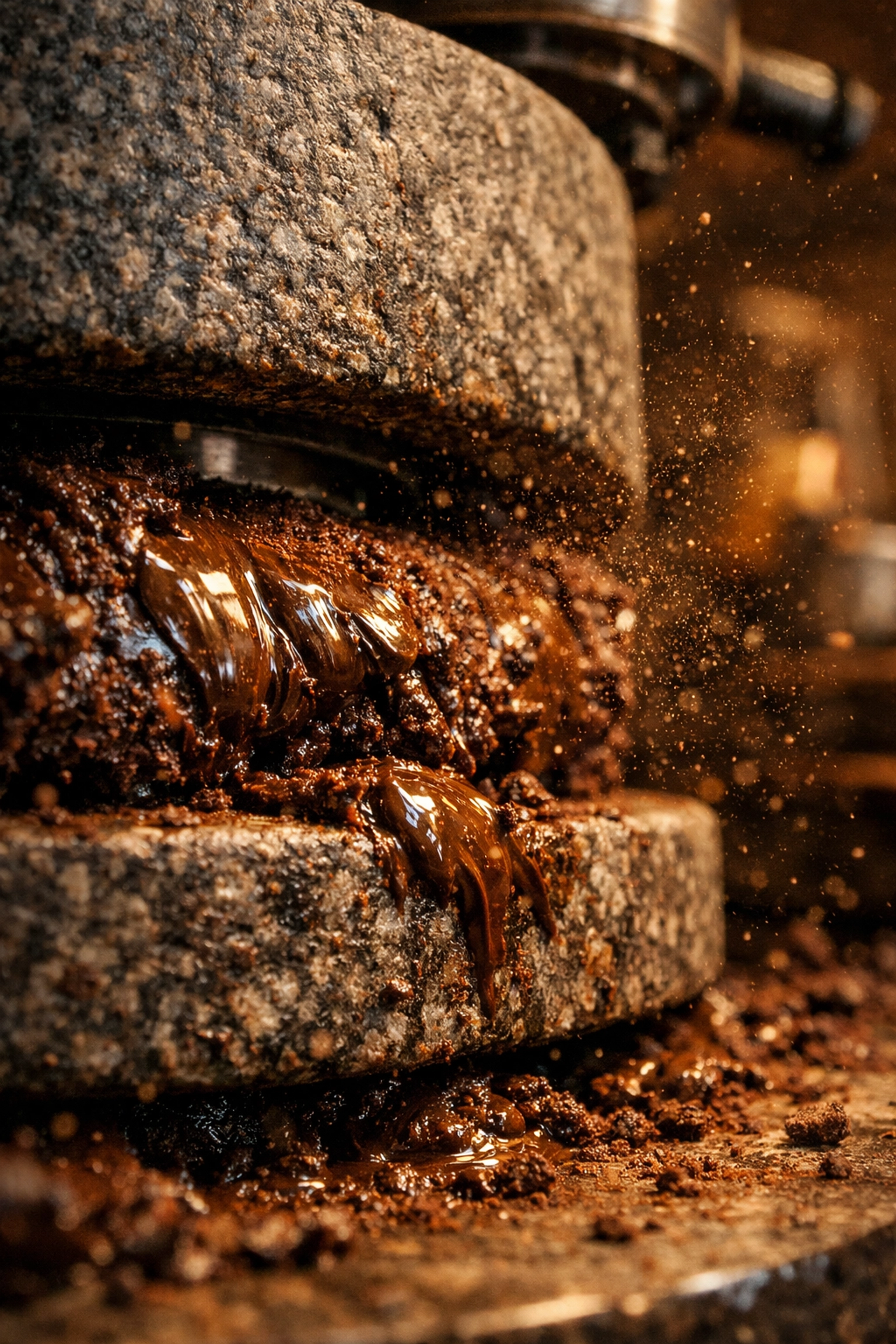
The magic happens through the gentle, continuous shearing action of granite wheels. Unlike industrial methods that pulverize cocoa with heat and force, stone grinding gradually reduces particle size through friction and pressure. The process is methodical, patient, and extraordinarily effective.
Think of it like this: conventional processing is a sledgehammer approach, while stone grinding is surgical precision. The result? A mouthfeel that consumers don't just prefer: they crave.
Temperature: The Flavor Preservation Secret
Here's where most industrial chocolate loses the plot entirely.
High-speed processing generates heat: lots of it. Temperatures can spike well above 140°F during conventional refining. What's the problem? Chocolate's volatile aromatic compounds begin degrading at temperatures above 120°F. These delicate molecules carry the fruity, floral, nutty, and earthy notes that distinguish extraordinary chocolate from mediocre bars.
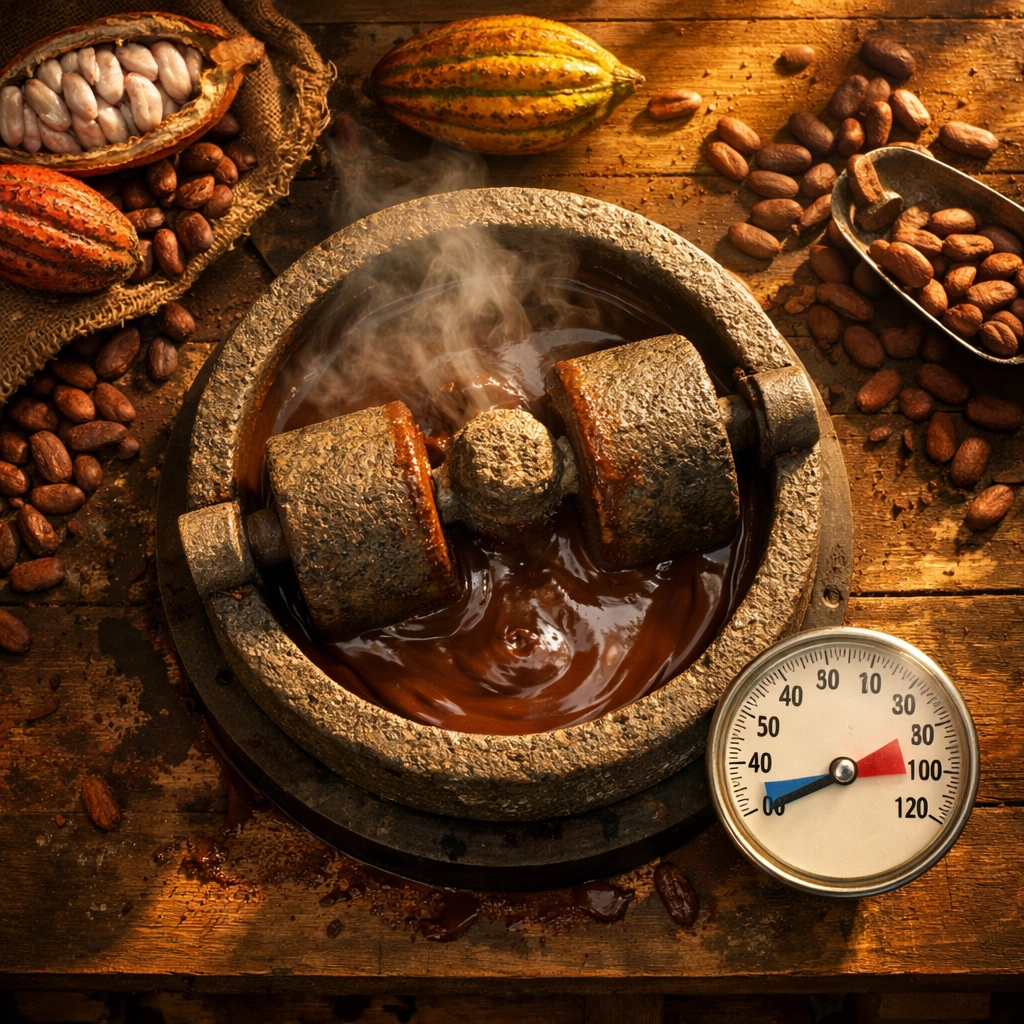
Stone grinding operates at significantly lower temperatures, typically between 100-115°F. This gentle thermal environment preserves those precious volatile compounds that would otherwise evaporate or transform into less desirable flavors.
But there's more to the story. The extended grinding time: often 24 to 72 hours: allows for something remarkable: controlled flavor development. As the granite wheels work their magic, cocoa's natural oils slowly release and integrate with sugar and other ingredients. This gradual process creates complex flavor profiles that simply cannot be rushed.
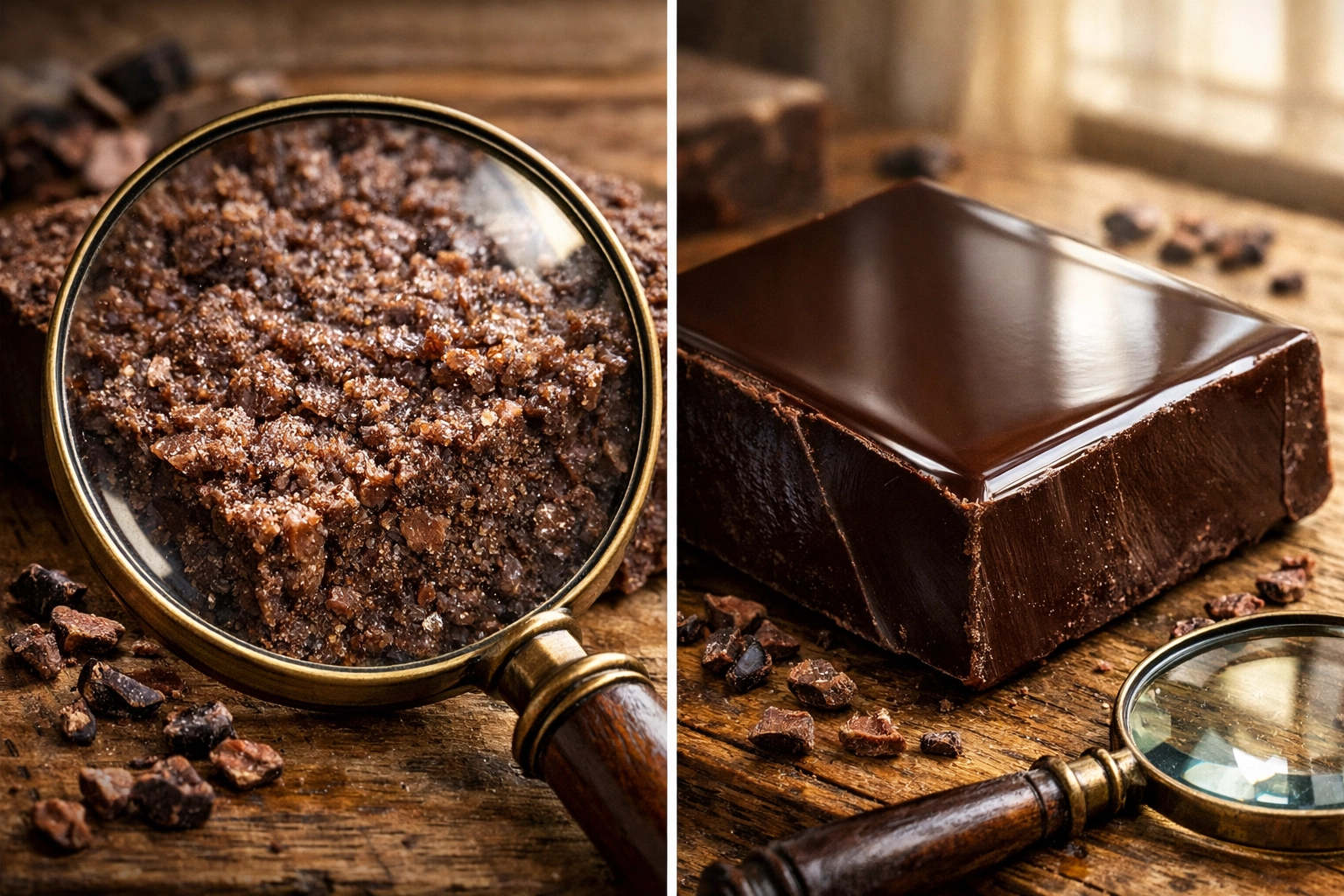
The extended conching effect also mellows harsh tannins and reduces acidity, resulting in a harmonious flavor profile where no single note dominates. When you taste stone-ground chocolate, you're experiencing the full symphony of cacao's 600+ flavor compounds, not just the loudest instruments.
Nutritional Integrity That Makes a Difference
Let's talk about what happens to cocoa's nutritional powerhouse during processing.
Cacao beans are loaded with beneficial compounds: flavonoids, polyphenols, magnesium, iron, zinc, and more. But here's the catch: these nutrients are heat-sensitive. The aggressive processing methods used in industrial chocolate manufacturing can significantly reduce these beneficial compounds.
Stone grinding's low-temperature approach preserves more of these heat-sensitive nutrients. Studies have shown that minimally processed cocoa retains higher levels of antioxidants, particularly the flavonoids associated with cardiovascular benefits and cognitive function.
But particle size plays an unexpected role too. The ultra-fine particles achieved through precision grinding increase the bioavailability of these nutrients. Essentially, your body can absorb and utilize them more effectively. Smaller particles mean greater surface area, which means more efficient digestion and nutrient uptake.
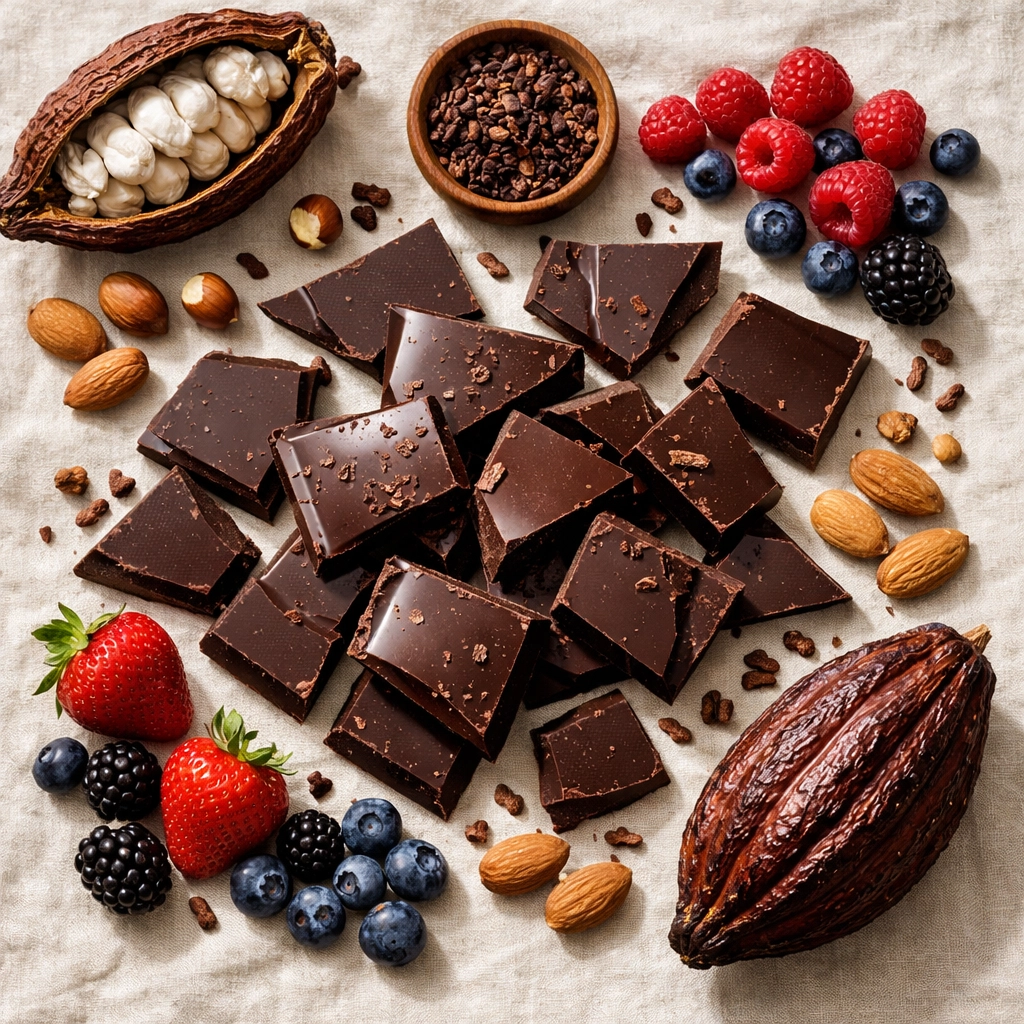
So when you choose stone-ground chocolate, you're not just treating your taste buds: you're making a choice that your entire body appreciates.
The Viscosity Advantage
Here's something most people don't realize: texture isn't just about particle size. Viscosity: the chocolate's flow characteristics: is equally crucial for achieving that perfect snap and melt.
Precision stone grinding gives makers unprecedented control over viscosity by manipulating grinding speed, pressure, and duration. Need a thinner chocolate for coating applications? Adjust the parameters. Want a thicker consistency for molded bars? Dial it in differently.
This level of control was nearly impossible with conventional equipment. Stone grinding allows artisan makers to fine-tune their chocolate's texture to match specific applications without adding extra cocoa butter or modifying the recipe significantly.
The even distribution of cocoa butter throughout the chocolate mass during stone grinding also contributes to better crystallization during tempering. The result? Chocolate with superior snap, glossy finish, and stable shelf life: all the hallmarks of professional-grade chocolate.
The Artisan's Advantage
Beyond the technical specifications, there's something profoundly satisfying about the stone grinding process itself.
Unlike automated industrial systems, stone grinding requires hands-on expertise and constant attention. Makers learn to read their chocolate: listening to the sound of the grinder, feeling the texture as it evolves, adjusting parameters based on bean origin and desired outcome.
This intimate relationship with the process connects modern artisans to chocolate-making traditions stretching back centuries. It's craftsmanship in its purest form, where science meets art and patience yields perfection.
For small-batch makers and craft chocolate entrepreneurs, stone grinding represents more than a processing method: it's a philosophy. It's about valuing quality over speed, flavor over efficiency, and maintaining complete control over every stage of chocolate creation.
Making the Switch: What You Need to Know
If you're considering precision stone grinding for your chocolate operation (or you're simply fascinated by the science), understanding the equipment is crucial.
Modern stone grinders range from compact 10-pound models perfect for test batches and micro-operations to commercial 200-pound systems designed for scaling production. The key is matching capacity to your production needs while ensuring consistent quality.
Professional stone grinding equipment delivers precision temperature control, variable speed settings, and durable granite stones designed for thousands of hours of operation. The investment pays dividends in product quality and customer satisfaction.
For artisan makers, the ability to experiment with different grinding profiles: adjusting time, temperature, and pressure for different bean origins: opens up endless creative possibilities. Single-origin chocolates can be optimized to highlight their unique characteristics, while blends can achieve perfect harmony.
Your Journey Into Precision Chocolate
The switch to precision stone grinding isn't just a trend: it's a return to fundamentals armed with modern understanding and technology. It's about refusing to compromise on quality and giving consumers the chocolate experience they deserve.
Whether you're an established maker looking to elevate your products or an aspiring chocolatier planning your first production setup, understanding stone grinding's advantages is essential knowledge for anyone serious about craft chocolate.
Ready to dive deeper into the world of artisan chocolate making? Create your free Cocoa Craft account to access our complete library of chocolate science articles, connect with fellow makers in our community, and explore our digital tools designed specifically for craft chocolate professionals. Our Chocolate Lab features interactive resources that help you understand particle size, viscosity, and flavor development in ways that textbooks simply can't match.
The future of chocolate is being ground one micron at a time; and it tastes absolutely extraordinary.
Written by Cocoa Craft | Saturday Sweet Science Series