
Game & Community Sunday: The Arcade Is the Front Door. Why the Chocolate Community Needs a Low-Stakes Place to Start
By Cocoa Craft
Get free, unlimited access to the full Cocoa Craft software suite in exchange for monthly feedback. Join the beta at cocoa-craft.com!
Start with a round of Hot Cocoa Tapper in the Cocoa Craft Arcade. Then, if curiosity takes over, generate a recipe, open Chocolate Lab, and save a batch plan.
That sequence matters more than it may seem.
The first step into chocolate can feel strangely intimidating
The chocolate craft world is full of generous, knowledgeable people. It is also full of unfamiliar language, specialized tools, and equipment prices that can make a beginner feel as if they missed an orientation session.
A new maker may encounter conversations about roast curves, particle size, viscosity, tempering, cocoa percentages, conching, inclusions, and origin flavor profiles before they have even made their first successful bar. Then there is the equipment question: Do you need a melanger? A stone grinder for chocolate? A tempering machine? A dedicated roaster? What belongs in a serious setup, and what can wait?
Those are legitimate production questions. They are not always welcoming first questions.
For someone interested in home chocolate making, the gap between “I love chocolate” and “I am ready to discuss my formulation” can feel enormous. The result is familiar: people read, watch, and lurk for months without posting a question.
That is not a lack of interest. It is a lack of an easy doorway.
Play a round, generate a chocolate recipe, and join the Cocoa Craft Beta Test. Get free, unlimited access to the full Cocoa Craft software suite in exchange for monthly feedback. Join the beta at cocoa-craft.com!
The lurker who finally said something
Picture a new maker: we’ll call her Maya.
Maya had been reading about bean to bar chocolate for months. She had bookmarked articles about roasting and watched more tempering videos than she would admit. She had even started comparing chocolate making equipment, although she was not yet sure whether she was comparing the right things.
She had a notebook with three pages of flavor ideas and no finished recipe.
Every time she considered asking a question in a community group, she imagined someone replying, “That depends on your process,” followed by six terms she did not understand. So she kept quiet. Quietly interested, quietly learning, quietly convinced that everyone else had started with more knowledge than she had.
Then she played a silly chocolate game.
Not a course. Not a buying guide. Not a technical webinar. Just a few minutes with Hot Cocoa Tapper, trying to beat her previous round while a mug cooled beside her laptop.
The next time she saw someone mention a difficult roast profile, she had a simple opening line:
“I just played Hot Cocoa Tapper, and now I’m wondering. What actually changes the flavor most at the roasting stage?”
That question started a conversation.
Someone answered. Another maker shared a tasting note. A third person described a batch that had gone too far and tasted flat. Maya replied with the flavor profile she wanted to build. Nobody asked for a production résumé.
The game did not teach her everything. It gave her a reason to enter the room.

Why a game works as a community front door
A low-stakes game removes several kinds of pressure at once.
You do not need to own a professional stone grinder. You do not need to know the difference between a roast defect and a flavor preference. You do not need a polished brand, a production schedule, or a confident opinion about every origin.
You can simply play.
That creates a useful kind of social permission. A scoreboard becomes a conversation starter rather than a test of expertise. People compare their best rounds, tease one another about an unfortunate miss, and then drift into the more interesting questions:
- What flavor were you trying to build?
- What did your last batch taste like?
- Did the roast bring out fruit, spice, or bitterness?
- What would you change next time?
- Which step are you still trying to understand?
This is how communities become practical instead of performative. People share results, not just credentials.
The Arcade gives those conversations a natural beginning. Visit the Game Hub, play a round, and bring your score into the discussion. You can also find the Arcade through TikTok, Facebook, or LinkedIn.
Play leads to curiosity, and curiosity needs somewhere to go
The important bridge is not game to purchase. It is game to question.
A person plays Hot Cocoa Tapper and starts wondering why chocolate behaves the way it does. That question can move into the Recipe Builder. A rough idea becomes a formulation with percentages, ingredients, and a target profile. From there, Chocolate Lab gives the experiment a place to live.
In Chocolate Lab, a maker can record:
- The recipe and ingredient percentages
- Roast, grind, conche, and temper notes
- Tasting observations
- Changes between versions
- Decisions that should be repeated, or avoided
That structure is useful for beginners because it turns vague impressions into visible learning. “This batch was better” becomes “The lower roast temperature preserved more fruit character.” “The texture felt wrong” becomes “The grind and conche time need another look.”
The software does not remove experimentation. It makes experimentation easier to remember.
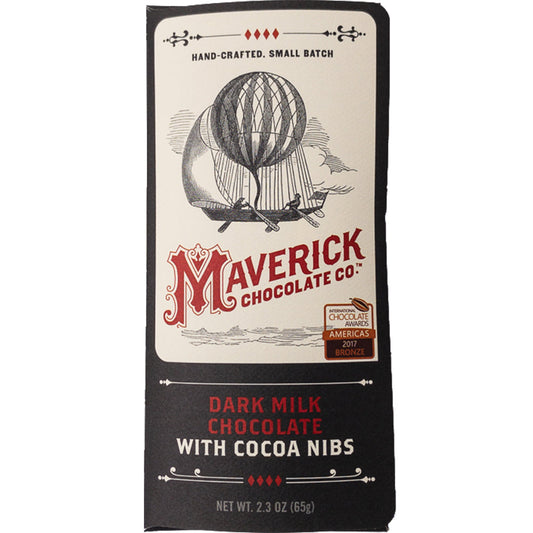
For a new home maker, that might mean starting with a simple tasting exercise using a bar such as 60% Dark Milk Chocolate with Cocoa Nibs. Taste it slowly. Write down the first aroma, the texture, the finish, and the moment the nibs change the experience. Then use those observations to describe what you might want in your own batch.
For a more experienced maker, the same process can support serious iteration across multiple versions.
The community gets stronger when beginners can arrive unfinished
A healthy chocolate community should have room for several kinds of participation.
One person may be ready to discuss a production run. Another may be deciding whether a melanger belongs in their kitchen. Someone else may only want to share a tasting note from a bar they enjoyed. A craft chocolate maker may be looking for feedback on a new inclusion. A curious visitor may be there because the game looked fun.
These are not competing levels of seriousness. They are different points on the same path.
The beginner who is allowed to arrive with a half-formed question is more likely to become the person who later shares a useful batch result. The maker who posts a failed tempering experiment gives someone else permission to try. The person who compares scores on a Sunday may eventually compare roast notes, recipe versions, or production decisions.
That is the community flywheel we want: play creates familiarity, familiarity creates questions, questions create experiments, and experiments create knowledge worth sharing.
It is also why Cocoa Craft is designed to connect the playful front end with the practical work behind it. Built by chocolate makers, for chocolate makers, the platform is meant to support the whole journey without demanding that everyone begin at the same place.
A Sunday path from arcade to batch plan
Try this simple sequence today:
- Play one round in the Cocoa Craft Arcade.
- Notice one question the game or the community brings to mind.
- Generate a recipe in the Cocoa Craft recipe tools.
- Open Chocolate Lab and record the idea, target flavor, and process assumptions.
- Write one tasting note from a chocolate bar or cocoa nib sample.
- Save the next batch plan so the experiment has somewhere to go.
- Share one result: a score, a question, a tasting note, or a batch lesson.
If the next step involves equipment, browse the Cocoa Craft shop when you are ready. Start with the process you want to improve, not with the most impressive machine you can find.
The goal is not to turn every visitor into a professional maker in one afternoon. The goal is to make the first step feel honest, enjoyable, and possible.
That is the role of the Arcade. It is not a distraction from serious chocolate work. It is the front door.
Join the beta and help shape what comes next
Cocoa Craft is building toward the operating system for chocolate production, but the best version of that system will come from people using it in real kitchens, workshops, and production rooms.
That is why the Beta Test is open to people who are willing to share monthly feedback. You can play, experiment, build recipes, test the tools, and tell us what makes the process clearer, or what still gets in the way.
Play a round. Generate a chocolate recipe. Try Chocolate Lab. Build a batch plan. Save your next experiment. Then join the beta.
Get free, unlimited access to the full Cocoa Craft software suite in exchange for monthly feedback. Join the beta at cocoa-craft.com!
For more practical chocolate craft articles, visit the Cocoa Craft blog. Start where you are, bring your questions, and leave room for someone else to start there, too.