
FactoryLink Friday: What Does Your Bar Actually Cost? The Batch Costing Math Most Craft Chocolate Makers Skip
Author: Cocoa Craft
A bar can look profitable right up until you count everything that happened before it reached the wrapper.
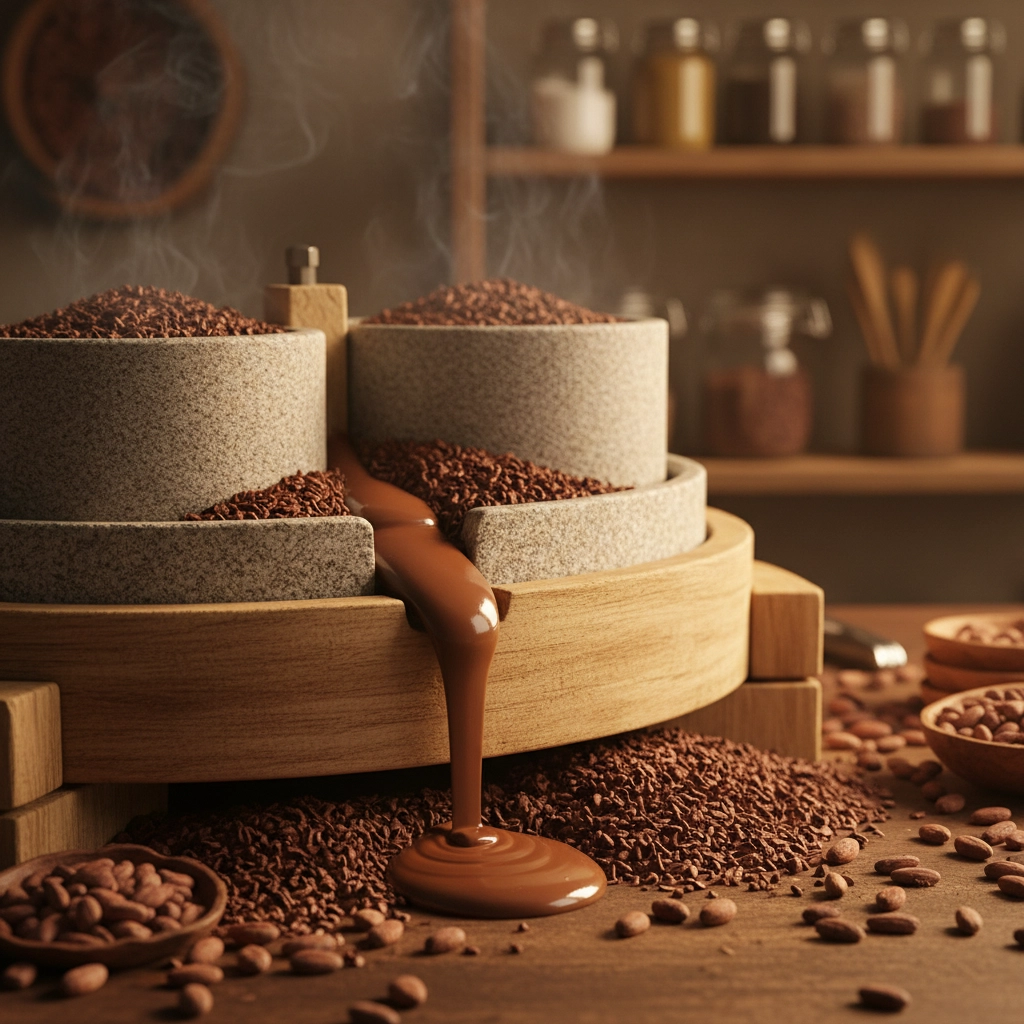
The beans were purchased. The roast ran longer than planned. The winnower left a little more husk than usual. Chocolate stayed in the stone grinder overnight. Someone cleaned the melanger, scraped the tempering bowl, rewrapped a few bars, pulled samples for a buyer, and quietly set aside the ones with air bubbles.
Then the wholesale customer asked for your price.
This is where many craft chocolate makers discover that “ingredient cost plus a bit” is not costing. It is optimism wearing an apron.
Proper batch costing starts with a simple principle:
You cannot price what you did not record.
For a bean to bar chocolate business, costing is a process data problem. Your formula matters, but so do your actual yields, labor minutes, packaging counts, rejects, samples, and equipment time.
Start with beans in, saleable bars out
The most important number in your batch record is not the recipe’s theoretical output. It is the number of good, sellable bars that made it into inventory.
Imagine a 60% dark milk chocolate recipe planned around a 30-kilogram total input:
- 20 kg roasted cocoa beans: $200
- Sugar, milk powder, cocoa butter, and other ingredients: $80
- Total ingredient input: $280
On paper, the batch might produce 500 bars at 60 grams each. In the production room, the numbers may look different:
- 1.8 kg lost during winnowing and transfer
- 0.9 kg retained in the grinder and holding containers
- 0.7 kg lost during tempering and molding
- 10 bars pulled for quality checks and samples
- 20 bars rejected for appearance or weight variation
- 420 saleable bars packed
The business paid for the full input. It only gets revenue from 420 bars.
That makes the denominator 420, not 500.
If you divide ingredient cost by the theoretical number, you get $0.56 per bar. If you divide it by the actual saleable output, the ingredient cost is $0.67 per bar. That difference is only eleven cents in this example, but across 10,000 bars it becomes $1,100.
And that is before labor, packaging, utilities, and overhead enter the room.
Track yield loss by stage, not just at the end
“Yield loss” sounds like one line on a spreadsheet. It is more useful when separated into stages.
Record the weight:
- After roasting
- After winnowing
- After refining and conching
- After tempering
- After molding
- After final packaging
This helps you distinguish normal process loss from avoidable loss.
A certain amount of husk removal is expected. Chocolate left behind in a stone grinder for chocolate is also part of reality, especially when running a small batch in equipment designed for a larger working capacity.
But repeated losses may point to a fix:
- Excessive husk suggests a roast or winnowing adjustment.
- High grinder retention may indicate a transfer or scraping issue.
- Tempering rejects may point to temperature control or handling.
- Weight variation may suggest a molding or depositing problem.
- A growing pile of samples may mean your sales process needs a planned sample budget.
The goal is not to pretend that loss can be eliminated. The goal is to know where it happens and price accordingly.
A useful formula is:
Yield percentage = saleable output weight ÷ total production input weight
You can also use saleable bars directly:
True ingredient cost per bar = total batch ingredient cost ÷ saleable bars
Do this for every SKU, including a dark milk chocolate recipe, an origin-specific dark bar, and inclusion products where nibs, coffee, nuts, or other additions may create extra handling and reject risk.
Labor includes the work nobody photographs
Most makers remember roasting, grinding, tempering, and molding. They are less likely to record the time spent weighing ingredients, moving trays, labeling boxes, cleaning surfaces, fixing a clogged winnower, or waiting for equipment to reach temperature.
That time still belongs to the batch.
For each run, record labor by activity:
- Sorting and preparation
- Roasting and cooling
- Winnowing
- Refining or melanging
- Tempering
- Molding
- Demolding
- Wrapping and labeling
- Cleaning and changeover
- Quality checks and order preparation
Suppose two people spend a combined 12.5 hours on the batch. At a fully loaded labor rate of $25 per hour, labor costs $312.50.
That rate should account for wages, payroll costs, and the value of owner or founder time. If the maker’s time is treated as free, the business may appear profitable while quietly requiring unpaid labor to survive.
Cleaning deserves special attention. Chocolate production cannot simply stop when the bars are molded. Equipment has to be scraped, wiped, washed where appropriate, and prepared for the next product. A recipe that takes four hours to run but two additional hours to clean is a six-hour job.
Cost the six hours.

Packaging is part of the product
A bar is not finished when it leaves the mold. It is finished when it is ready to sell.
Count every packaging component:
- Inner foil or film
- Paper wrapper or carton
- Printed labels
- Stickers and seals
- Inserts
- Batch or lot labels
- Shipping cartons allocated to wholesale orders
- Extra packaging used for samples and replacements
If packaging costs $0.52 per saleable bar and you pack 420 bars, that is $218.40. Do not calculate packaging against the theoretical output if the missing bars still consumed labor and ingredients.
Samples and shrink deserve their own line as well. A wholesale prospect may receive six bars. A retailer may request a tasting case. A few bars may be held for photography, retained for quality records, or damaged during transport.
Those units are not necessarily waste. They may be useful commercial expenses. But they should not disappear from your costing.
Record them.
A complete batch-costing example
Here is a simplified batch record:
| Cost category | Batch cost |
|---|---|
| Ingredients | $280.00 |
| Direct labor, including cleaning | $312.50 |
| Utilities and equipment allocation | $95.00 |
| Packaging for 420 saleable bars | $218.40 |
| Total batch cost | $905.90 |
With 420 saleable bars:
$905.90 ÷ 420 = $2.16 true cost per bar
That $2.16 is much more useful than the $0.56 ingredient-only estimate. It reflects the actual run, not the recipe’s best-case fantasy.
You can make the number more precise by separating direct costs from broader overhead. Rent, insurance, software, maintenance, and administrative work may be allocated monthly or by production hour. The method matters less than applying it consistently and reviewing it as your volume changes.
Wholesale math: know your floor before you quote
Wholesale pricing is where weak costing becomes expensive.
Retailers commonly need room between their purchase price and final shelf price. As a rough planning rule, wholesale may land around half of retail. That is not a universal contract, but it is a useful constraint.
If a bar sells for $12 retail, a wholesale price near $6 may be expected.
With a true cost of $2.16, a $6 wholesale price leaves $3.84 before other selling expenses. That may be workable, depending on freight, payment fees, promotions, sales commissions, and account requirements.
Now change the production reality:
- Same retail price: $12
- Expected wholesale price: $6
- True cost per bar after slow production and high labor: $4.25
The wholesale gross margin is now only $1.75 per bar, or about 29%. After freight, discounts, samples, and administrative time, the account may be unprofitable.
A simple target-margin formula is:
Required price = true cost per bar ÷ (1 − target gross margin)
At a 45% target gross margin and a $4.25 cost:
$4.25 ÷ 0.55 = $7.73
If the market will only support a $6 wholesale price, you have several choices:
- Raise the retail price
- Reduce labor time
- Improve yield
- Adjust the bar size or format
- Change packaging
- Increase production volume
- Decline the account
- Treat the product as a direct-to-consumer SKU instead
The important part is deciding with numbers rather than discovering the problem after delivering three purchase orders.
Turn costing into a weekly operating habit
FactoryLink Friday should not be a once-a-year spreadsheet exercise. Close out every batch while the details are still fresh.
Record:
- Ingredient lots and actual quantities
- Equipment used and run time
- Input and output weights
- Saleable bar count
- Rejects, samples, and shrink
- Labor minutes by production stage
- Packaging used
- Problems, adjustments, and unusual events
After several batches, calculate rolling averages. Your first run may include setup time. Your fifth run may reveal a more reliable labor pattern. A new mold, better transfer method, or revised roast profile may change yield.
This is where Cocoa Craft’s Recipe Builder and Formulation Tool become useful. Keep formulas in percentages, connect them to batch records, and build a history of actual yield rather than relying on memory or a notebook with chocolate fingerprints on every page.
That record supports better recipe development, more defensible wholesale quotes, and clearer equipment decisions. If cleaning consumes too much time, the answer may be workflow changes. If production is bottlenecked by a small melanger, the answer may be new chocolate making equipment. If yield varies by origin, the answer may be tighter process controls.
The data tells you where to look.
Cocoa Craft is built by chocolate makers, for chocolate makers: part recipe workspace, part production record, and part commercial decision tool. The aim is practical: helping you build the operating system for chocolate production one reliable batch at a time.
Price the batch you actually made
A profitable bar is not created by a good formula alone. It comes from knowing what went into the batch, what came out, what was sold, and what work made the difference.
Before your next wholesale quote, close the batch. Count the bars. Add the cleaning time. Include the wrappers. Account for samples. Then calculate the price that protects the business.
Create a free Cocoa Craft account to organize your recipes, formulations, and production history.
When you are ready to improve your setup, visit the Cocoa Craft equipment shop for professional stone grinders, melangers, and other chocolate making equipment.
And when the spreadsheet has had enough chocolate dust for one day, take a short break with the Cocoa Craft Arcade.
Get free, unlimited access to the full Cocoa Craft software suite in exchange for monthly feedback. Join the beta at cocoa-craft.com!