
Craft Chocolate Makers' Guide to Scaling Up: Equipment That Actually Matters
Ready to take your craft chocolate making from kitchen hobby to serious business? The jump from making a few bars for friends to producing hundreds (or thousands) of bars monthly isn't just about working harder: it's about working smarter with the right equipment.
Here's the thing: most craft chocolate makers get stuck because they either under-invest in crucial equipment or blow their budget on fancy machines they don't actually need yet. After years of helping artisan chocolate makers scale their operations, I've seen both mistakes way too many times.
Let's cut through the equipment overwhelm and focus on what actually moves the needle for your growing chocolate business.
Understanding Your Production Sweet Spot
Before diving into specific machines, you need to honestly assess where you are and where you're headed. Chocolate making equipment requirements change dramatically based on your production goals.
Micro-Batch Operations (250g-5kg batches): Perfect for testing recipes, farmers markets, and small-scale artisan work. You're probably using tabletop equipment and can process everything over several days.
Small Commercial Scale (10kg-50kg batches): This is where most growing craft chocolate makers live. You need reliable, consistent equipment but don't require industrial automation yet.
Mid-Size Commercial (50kg-200kg batches): Now we're talking serious business. Your equipment choices directly impact your ability to meet wholesale orders and maintain consistent quality.
The key? Don't skip steps. Jumping from micro-batch straight to industrial equipment usually leads to cash flow problems and operational headaches.
The Stone Grinder Decision: Your Production Foundation
Let's start with the heart of your operation: the grinder. This decision impacts everything downstream, from texture to production speed to energy costs.
Stone grinders remain the gold standard for artisan chocolate makers, and for good reason. They develop superior flavor through their unique grinding action and gentle heat generation. But not all stone grinders are created equal when scaling up.
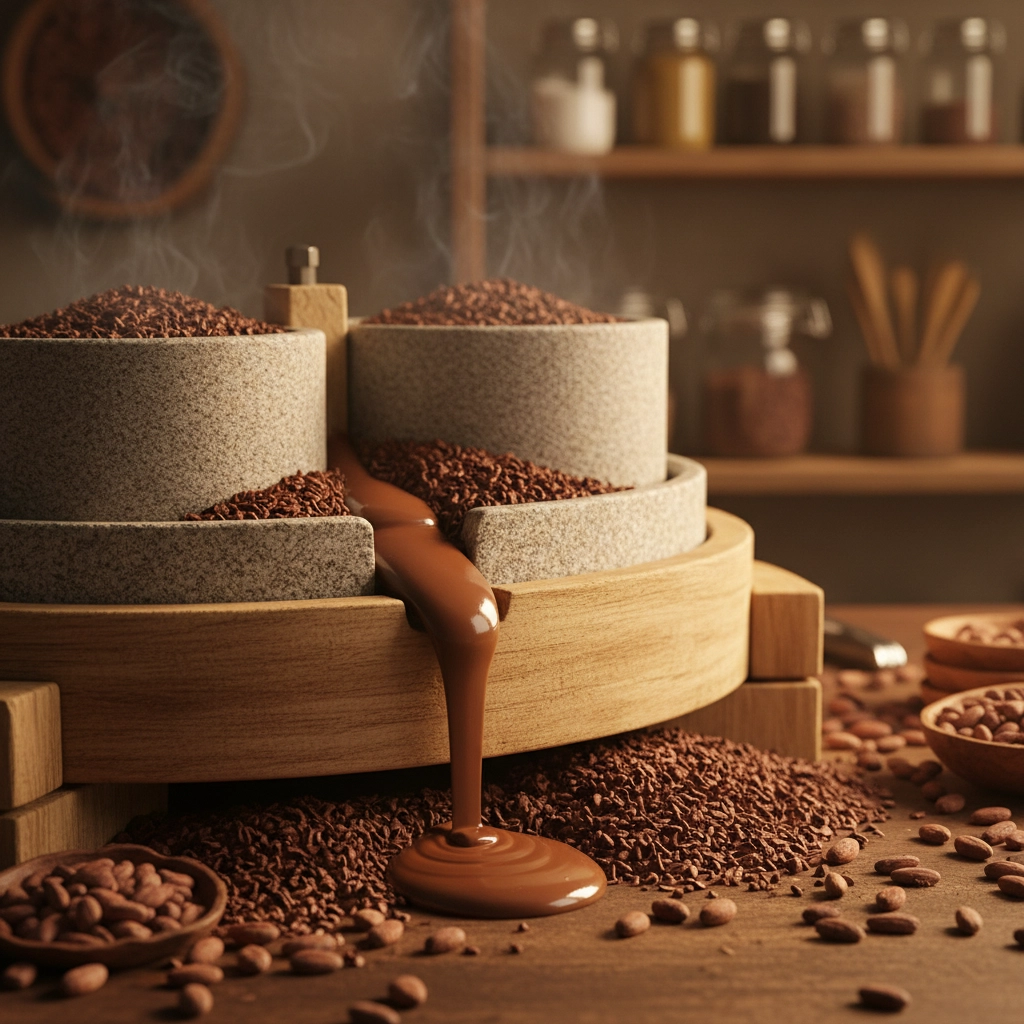
For makers transitioning from home chocolate making to commercial production, our Alpha200 grinder offers the perfect middle ground. It handles 5-20kg batches consistently while maintaining the stone grinding advantages that create exceptional flavor development.
Here's what really matters when choosing your grinding setup:
- Capacity flexibility: Can you run smaller test batches alongside larger production runs?
- Temperature control: Excessive heat destroys delicate flavor compounds
- Particle size consistency: This directly impacts mouthfeel and customer satisfaction
- Maintenance requirements: Downtime kills productivity
Ball mills offer faster processing for larger batches but require more careful temperature monitoring. Wet grinders (melangers) work great for starting out but become bottlenecks as you scale.
Winnowing: The Unsung Hero of Quality Control
Most new craft chocolate makers underestimate how crucial proper winnowing becomes at scale. Hand-winnowing works fine for small batches, but try processing 50kg of roasted beans by hand: you'll quickly understand why automated winnowing matters.
A quality winnower doesn't just separate husks from nibs; it dramatically improves your downstream processing efficiency. Cleaner nibs mean smoother grinding, better tempering, and fewer quality control issues.
Look for winnowers with adjustable airflow and vibration settings. Different bean origins require different winnowing parameters, and flexibility here saves you countless hours of troubleshooting.
Tempering Tools That Actually Scale
Tempering separates amateur chocolate makers from professionals: and it's where many scaling operations fall apart. Hand tempering works for small batches, but becomes impossibly time-consuming and inconsistent at commercial volumes.
Tabletop tempering machines handle 5-15kg batches reliably and offer precise temperature control. They're perfect for mid-scale producers who need consistency without industrial complexity.
Continuous tempering systems make sense once you're regularly processing 50kg+ batches. They maintain consistent temperature while you focus on molding and finishing.
The real secret? Invest in temperature monitoring equipment alongside your tempering machine. Digital thermometers with probe alerts prevent costly batches from falling out of temper.
Smart Equipment Sequencing for Growing Operations
Here's where most craft chocolate makers mess up their scaling journey: they buy equipment randomly instead of following a logical sequence that matches their growth trajectory.
Phase 1: Foundation Building Start with a reliable stone grinder, basic tempering capability, and quality molds. Focus on perfecting your recipes and building customer demand.
Phase 2: Efficiency Improvements
Add automated winnowing and upgrade to a larger capacity grinder. Invest in better temperature monitoring and more molds to reduce production bottlenecks.
Phase 3: Quality Consistency Introduce continuous tempering, automated molding systems, and quality control equipment. Now you're ready for wholesale accounts and larger production runs.
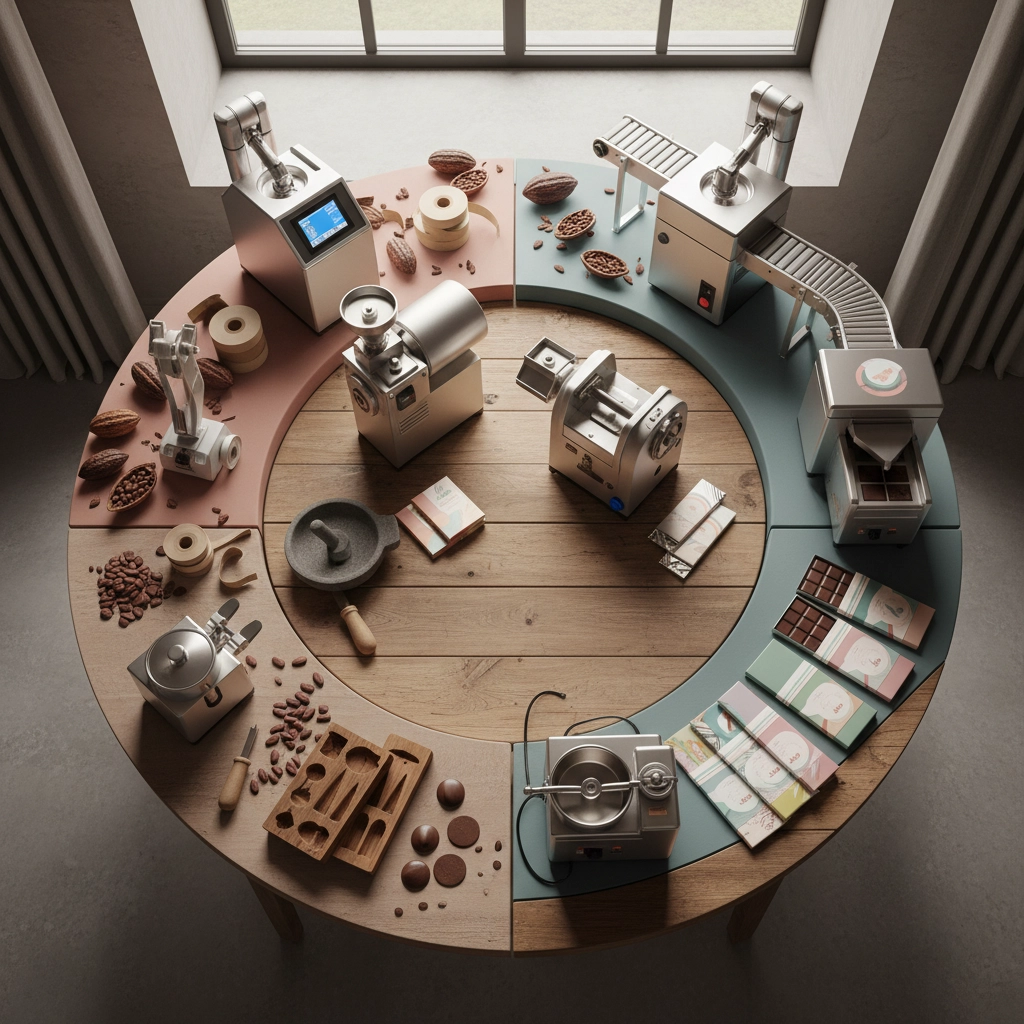
The Bean-to-Bar Equipment Investment Timeline
Bean to bar chocolate production requires coordinating multiple pieces of equipment, but you don't need everything immediately. Here's the realistic investment timeline:
Months 1-6: Grinder, basic tempering, molds, and packaging supplies. Focus on recipe development and local market testing.
Months 6-18: Automated winnowing, improved temperature control, and expanded mold inventory. Scale up production for farmers markets and online sales.
Months 18-36: Continuous tempering, quality control equipment, and packaging automation. Ready for wholesale accounts and serious growth.
This timeline assumes steady sales growth and reinvested profits. Don't rush it: under-capitalized equipment purchases often lead to buying twice.
Maintenance Reality Check
Professional chocolate making equipment requires regular maintenance to perform reliably. Factor these costs and time commitments into your scaling plans:
Daily: Clean all chocolate-contact surfaces, check temperature calibrations, inspect moving parts for wear.
Weekly: Deep clean grinder stones, calibrate tempering equipment, lubricate moving components.
Monthly: Professional equipment inspections, replace worn parts, update temperature probes.
Skipping maintenance doesn't save money: it creates expensive emergency repairs and production downtime when you can least afford it.
Making Your Next Equipment Decision
Ready to upgrade your chocolate making setup? Start by honestly evaluating your current production volume and realistic growth projections for the next 18 months.
Don't buy equipment for where you want to be in five years: buy for where you'll be next year with room to grow. Over-investing in equipment creates cash flow problems that can kill an otherwise healthy business.
Visit our complete equipment collection to explore options that match your current scale. Whether you're upgrading from a tabletop melanger or adding automated winnowing to your existing setup, focus on equipment that eliminates your current biggest bottleneck.
The craft chocolate industry needs more makers who understand that scaling success comes from smart equipment choices, not just bigger machines. Every piece of equipment should solve a specific problem in your production flow while setting you up for the next growth phase.
Your chocolate deserves equipment that matches its quality. Your customers deserve the consistency that proper equipment provides. And you deserve to spend time perfecting recipes instead of fighting with inadequate equipment.
What's your next equipment upgrade going to be?