
Boost Your Bean-to-Bar Quality Instantly with These 5 Chocolate Making Equipment Tips
Ever wonder why some bean-to-bar chocolate melts on your tongue like silk while others feel grainy and rough? The secret isn't just in the beans, it's in the equipment you're using to transform them.
Here's the truth most makers learn the hard way: you can source the finest cacao from Ecuador, roast it with the precision of a watchmaker, and still end up with chocolate that doesn't live up to your vision. Why? Because the tools you're working with are either holding you back or haven't been optimized for your specific workflow.
Today we're breaking down five equipment tips that'll elevate your bean-to-bar game immediately. Whether you're just starting your chocolate journey or you're a seasoned maker looking to refine your process, these insights will help you produce bars that make people stop mid-bite and ask, "Wait, you made this?"
Tip #1: Your Stone Grinder Is Your Best Friend (Treat It That Way)
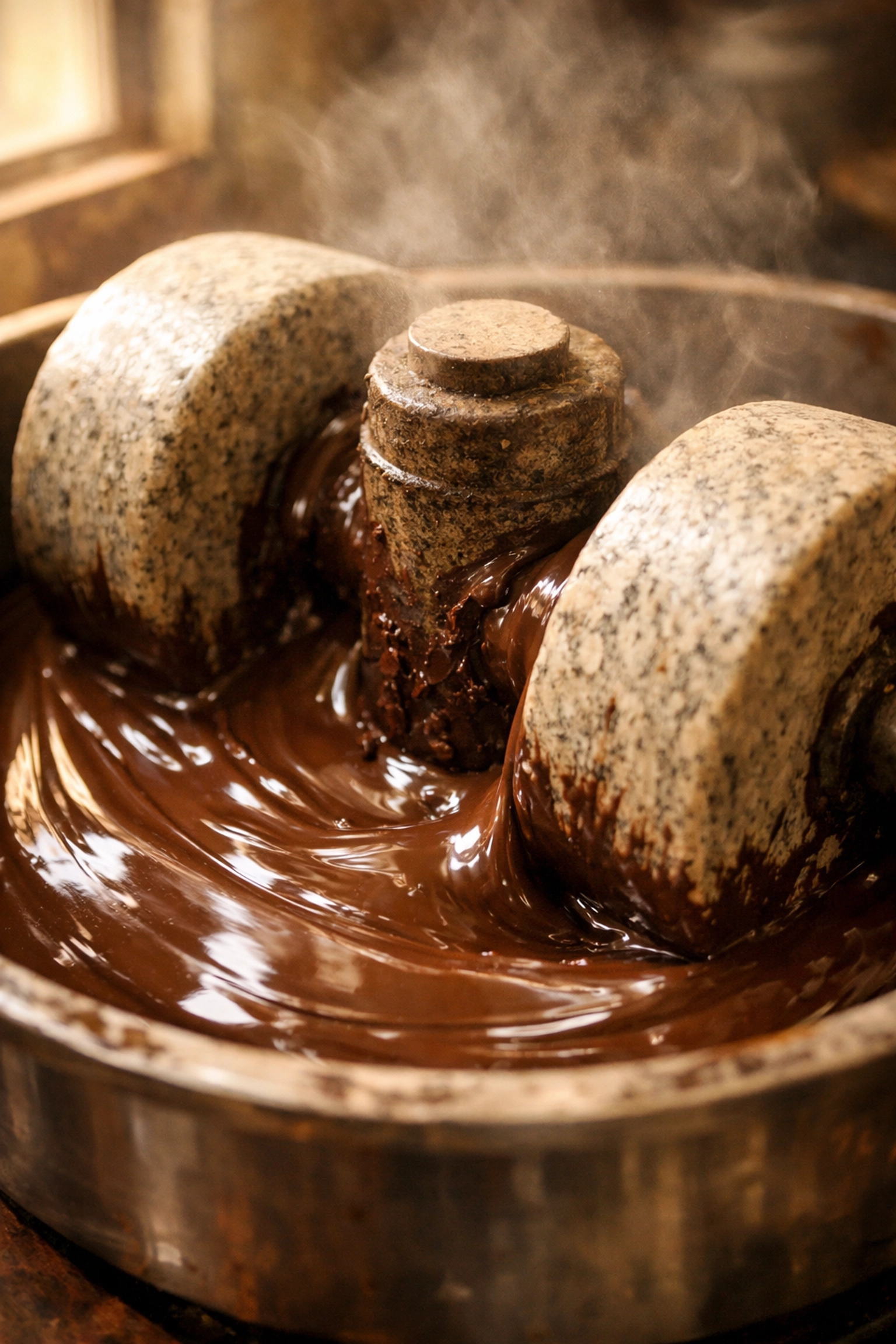
Let's start with the heart of any bean-to-bar operation: your stone grinder (also called a melanger). This is where the magic happens, where rough nibs transform into liquid chocolate with that smooth, luxurious mouthfeel we all crave.
But here's what most beginners don't realize: the quality of your grind directly impacts the final texture and flavor development of your chocolate. You can't achieve modern, silky-smooth chocolate without proper grinding and refining. It's essentially impossible.
So how do you optimize your stone grinder for peak performance?
Run it longer than you think you need to. Most makers stop grinding after 12-18 hours, but depending on your recipe and desired particle size, you might benefit from 24-36 hours of refining. The longer grind allows flavor compounds to develop fully and creates that melt-in-your-mouth texture.
Keep those granite wheels clean. Residue buildup affects heat distribution and can introduce off-flavors into your next batch. A quick wipe-down between batches takes five minutes but saves hours of troubleshooting weird taste notes later.
Monitor your temperatures. Your grinder generates friction heat, that's normal and actually beneficial for flavor development. But you want to keep things in the sweet spot (around 45-55°C). Too hot and you'll cook off delicate flavor notes. Too cool and your refining takes forever.
Want to see what professional-grade stone grinders can do for your operation? Check out our shop where we've curated equipment that serious makers actually use.
Tip #2: Temperature Control Isn't Optional, It's Everything
You know what separates amateur chocolate from professional bars? Consistency. And you know what creates consistency? Precise temperature control at every single stage of production.
Think about it: roasting, grinding, tempering, each step has an ideal temperature range that brings out the best in your chocolate. Miss those targets by even a few degrees and you're looking at burnt notes, poor snap, or that dreaded bloom that makes your beautiful bars look dusty and old.
Invest in a quality thermometer with a wide range. You need something that can measure well above 100°C for roasting while also being precise enough for tempering work in the 27-32°C range. That cheap kitchen thermometer from the drawer? It's not cutting it anymore.
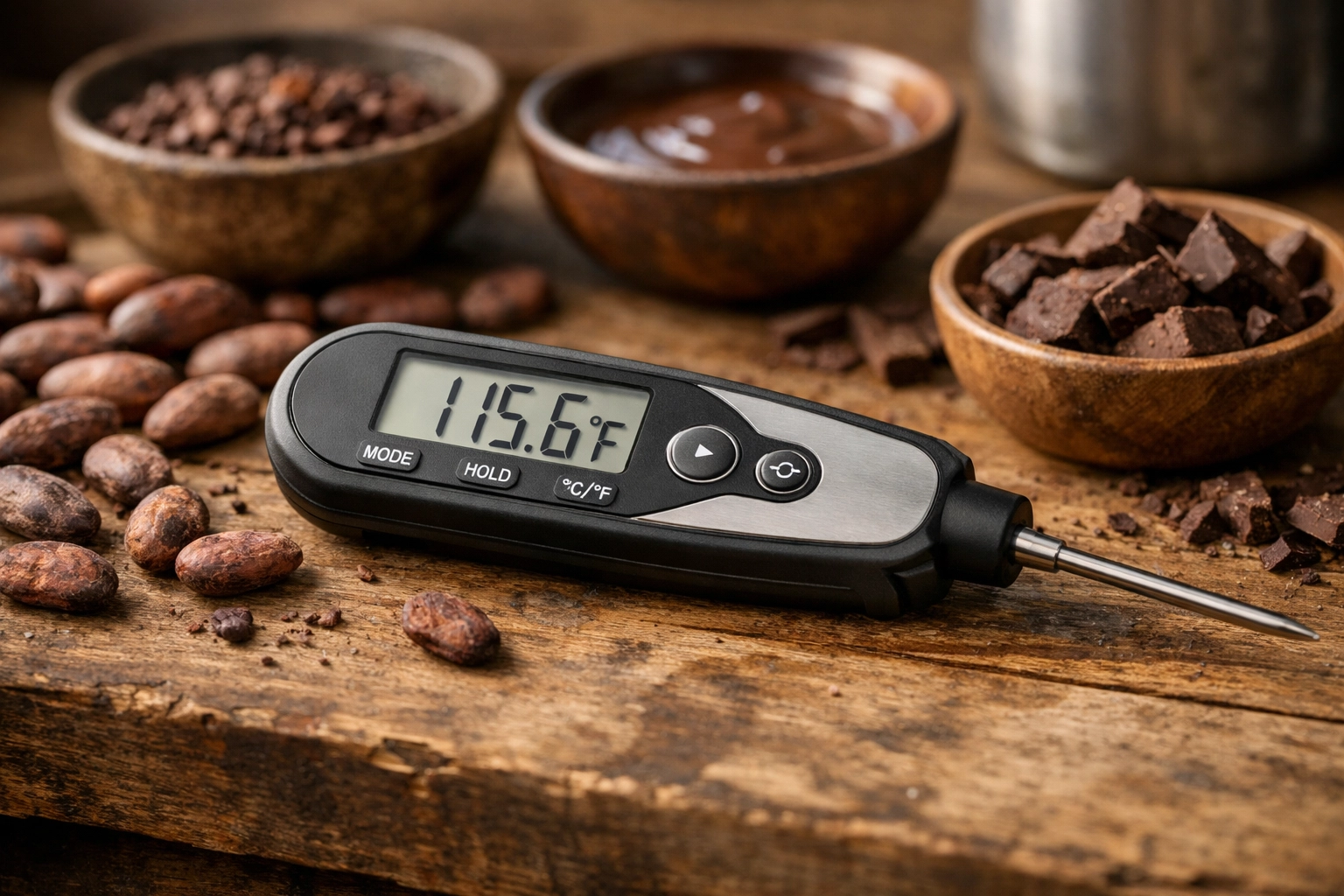
Here's a pro move: keep a temperature log for your first 20 batches. Note roasting temps, grinding temps, and tempering curves. You'll start to see patterns, "Oh, when I roast Ghana beans at 135°C for 18 minutes, I get this incredible fruity note." That's the kind of knowledge you can't buy; you have to discover it through careful observation and measurement.
And speaking of tempering, if you're not consistently hitting your temperatures during this critical phase, you'll never achieve that glossy finish and satisfying snap that makes people reach for a second piece. Temperature precision here is non-negotiable.
Tip #3: Don't Skip the Roaster (Your Flavor Profile Depends on It)
Let's talk about roasting, arguably the most impactful step in your entire bean-to-bar process. This is where you unlock (or accidentally destroy) all those incredible flavor notes hiding in your cacao beans.
Some makers try to get by with a home oven or improvised setup. Can you technically roast beans that way? Sure. Will you get consistent, professional results that allow you to develop signature flavor profiles? Absolutely not.
A dedicated cocoa bean roaster gives you precise temperature control, even heat distribution, and, here's the key, repeatability. When you nail a roast profile that brings out caramel notes in your Dominican beans, you want to be able to recreate that exact result for your next batch.
Different roasting equipment offers different advantages. Drum roasters provide excellent even heating. Fluid bed roasters allow for precise airflow control. The right choice depends on your production scale and the flavor profiles you're chasing.
But here's what they all have in common: they give you control. Control over time, temperature, and airflow. That control translates directly into better-tasting chocolate.
Tip #4: Heavy Molds Make All the Difference
Okay, let's talk about something that seems simple but actually matters way more than you'd think: your chocolate molds.
Ever tried to unmold chocolate from a flimsy, thin mold? It's a nightmare. The chocolate sticks, you have to pry pieces out, sometimes they break, and the surface looks less than professional. Not exactly the presentation you want when you're trying to build a brand.
Heavy, quality molds transform the entire molding experience. They conduct heat more evenly, which helps with the setting process. They release cleanly, which means your bars look professional and pristine. And they're easier to clean, which saves you time between batches.
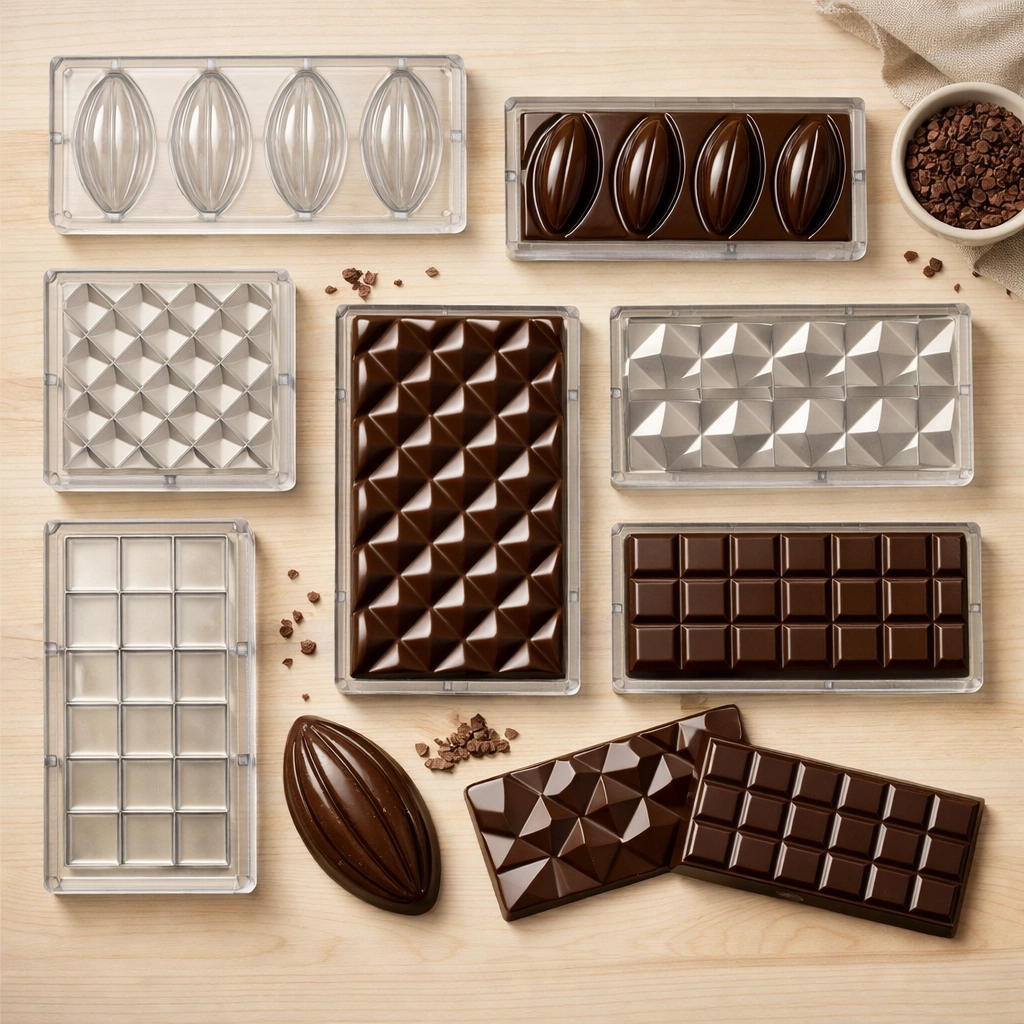
When you're selecting molds, look for designs that are both aesthetically pleasing and practical. Cocoa pod shapes? Beautiful and symbolic. Half spheres? Perfect for bonbons and experimentation. Simple bar molds? Classic and elegant.
The molds you choose become part of your brand identity. Those distinctive shapes become recognizable to your customers. So invest in quality pieces that you'll be proud to use batch after batch.
Tip #5: Build Out Your Supporting Cast of Equipment
Here's where we get into the equipment that doesn't grab headlines but makes your daily workflow smoother and your final product better.
Digital scales aren't glamorous, but precision measuring is the foundation of consistent chocolate making. You need accuracy down to the gram (or even finer for some ingredients). Eyeballing measurements might work for home cooking: it doesn't fly in professional chocolate making.
Cocoa bean crackers and winnowers save you hours of tedious hand-work separating nibs from shells. Time is money, and the less time you spend on prep work, the more time you can dedicate to perfecting your recipes and growing your business.
Bean coolers might seem like a luxury, but they're actually crucial for locking in your desired roast profile. Quick cooling stops the cooking process immediately, preserving exactly the flavor notes you worked so hard to develop.
Vibrating tables remove air bubbles from your molded chocolate, creating that professional, smooth surface. No one wants to bite into a beautiful bar only to find it full of holes.
Refractometers measure sugar content with precision, helping you hit your target sweetness levels consistently. When you're dialing in a recipe, this kind of measurement tool is invaluable.
Each of these pieces of supporting equipment solves a specific problem and removes a potential point of inconsistency from your process. Professional results come from professional systems.
Your Next Step: Level Up Your Chocolate Game
Look, you can read equipment tips all day, but nothing changes until you actually implement them. The makers who produce extraordinary chocolate aren't the ones with the most knowledge: they're the ones who take action.
Ready to upgrade your bean-to-bar operation with equipment that actually delivers? Create your free Cocoa Craft account and get access to our full equipment shop, plus exclusive tools like our Formulation Tool to help you dial in your recipes with precision.
Already have an account? Log in here and explore our latest equipment arrivals.
And if you want to dive deeper into the technical side of chocolate making, check out our Chocolate Lab where we break down the science behind every step of the bean-to-bar process.
Your next level of chocolate making is waiting. The only question is: are you ready to claim it?