
Are 60% Cocoa Bars Dead? What Craft Chocolate Makers Are Really Making in 2026
Let's talk about the elephant in the chocolate shop: that reliable 60% dark chocolate bar gathering dust on your shelf.
You know the one. It's been your safe bet for years, not too bitter, not too sweet, just... there. But walk into any craft chocolate maker's studio in 2026, and you'll notice something interesting: nobody's talking about percentages anymore.
They're talking about passion fruit meeting Peruvian cacao. Pistachio cream swirled with crispy angel hair. Coffee arabica dancing with caramel notes in a 68% bar that tastes nothing like your neighbor's 68% bar.
So are 60% bars dead? Not exactly. But the way we think about them? That's changing faster than a tempering curve gone wrong.
What Actually Happened to the 60% Bar
Here's the truth: craft chocolate makers in 2026 aren't abandoning cocoa percentages, they're just done letting them be the whole story.
Think about it. When you tell someone you made a "60% dark chocolate bar," what have you actually communicated? The math, sure. But what about the Ecuadorian Arriba Nacional beans you sourced? The subtle banana notes in the fermentation? The way you paired it with locally-foraged rosemary that transforms everything?
The percentage became a crutch. A shorthand that actually obscured more than it revealed.
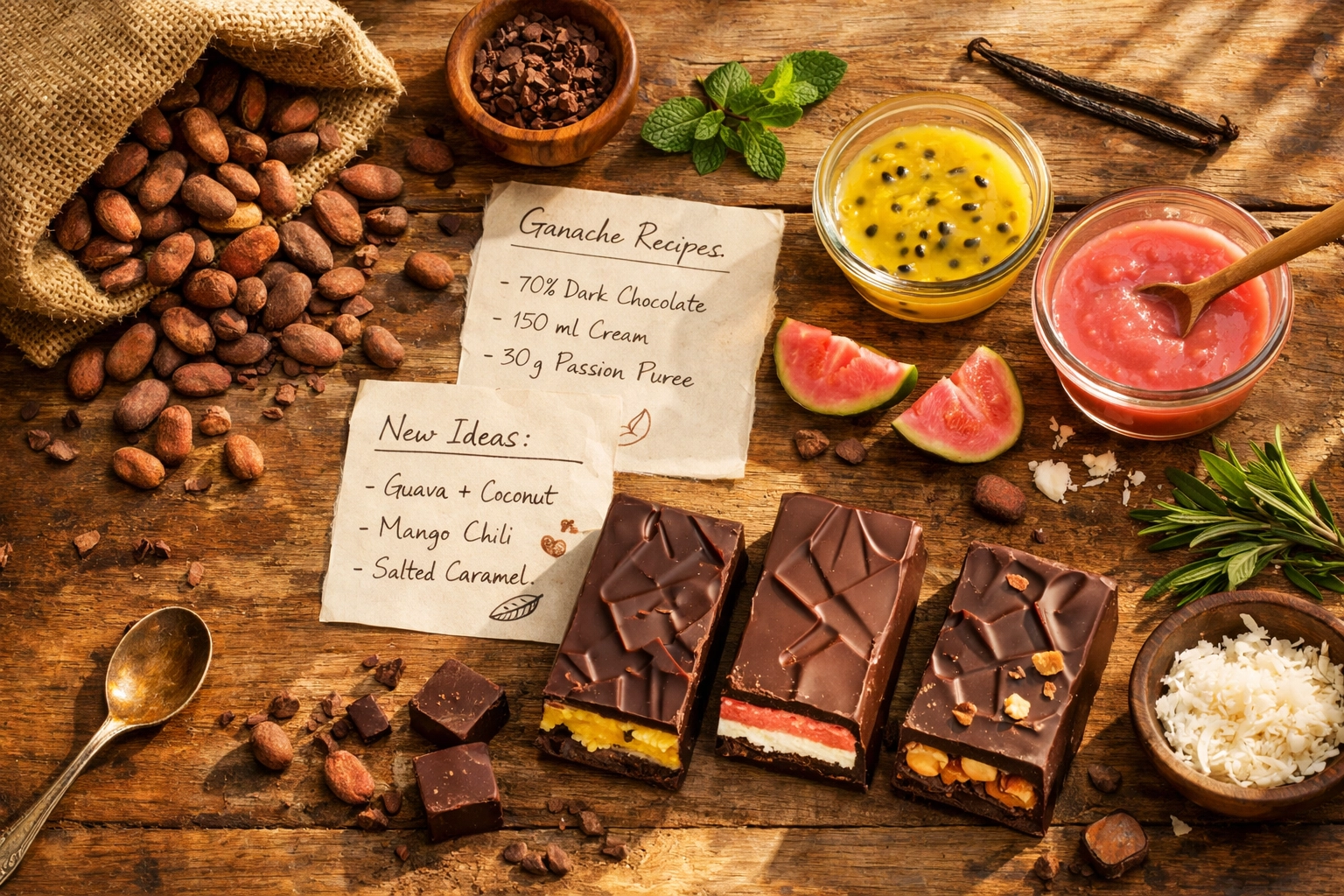
Modern craft makers are flipping the script. They're leading with origin, flavor profile, and sensory experience, and letting the cocoa percentage be a supporting character instead of the headline act.
The "Intentional Indulgence" Revolution
The market research doesn't lie: consumers in 2026 are choosing chocolate based on emotional appeal and texture over technical specifications. They want smaller portions with bigger personalities. Richer experiences. Stories they can taste.
This shift is what industry analysts are calling "intentional indulgence", and it's reshaping how successful makers approach every bar they craft.
What does this look like in practice?
Fruit-Forward Intensity: That 70% Chuao chocolate paired with passion fruit and guava? It's not about the 70. It's about how those tropical notes amplify the chocolate's natural fruit-forward character, creating something that feels like eating sunshine.
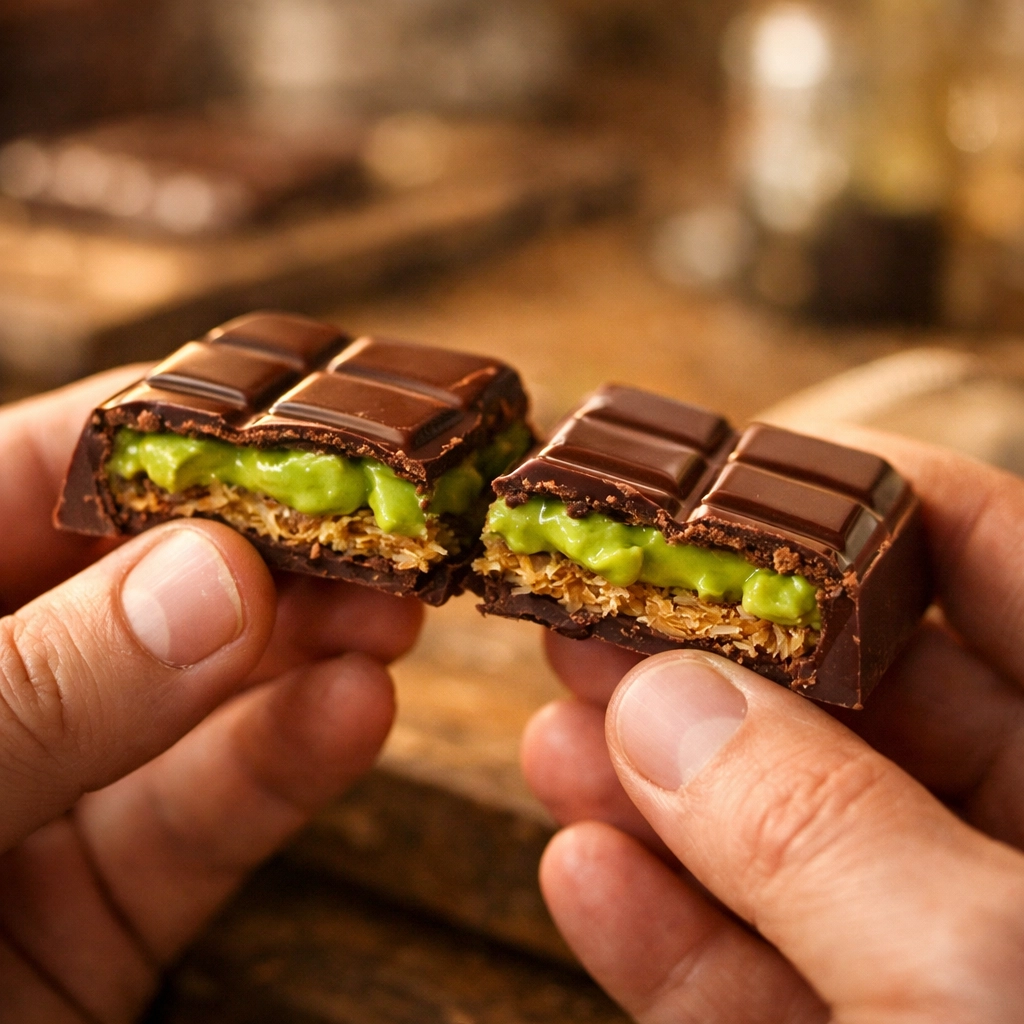
Filled Innovations: Search volume for "chocolate bar fillings" jumped 191% in Q2 2025. The viral Dubai chocolate bar with its pistachio-kataifi center wasn't a gimmick, it was proof that texture and filling innovation drive trends more than any number on a label.
Sweet-Savory Crossovers: Craft makers are pairing 62% bars with ingredients like salty perilla, ruby tea, and peach oolong. These aren't accidents, they're calculated flavor experiments that create depth traditional percentage-focused bars can't touch.
How to Craft Bars That Actually Sell in 2026
Alright, let's get practical. If you're still leading with "I make a 60% and a 70% bar," here's your workshop challenge: Start with flavor, end with percentage.
Step 1: Choose Your Origin Story
Before you think about sugar ratios, ask yourself: What's the inherent flavor profile of my cacao?
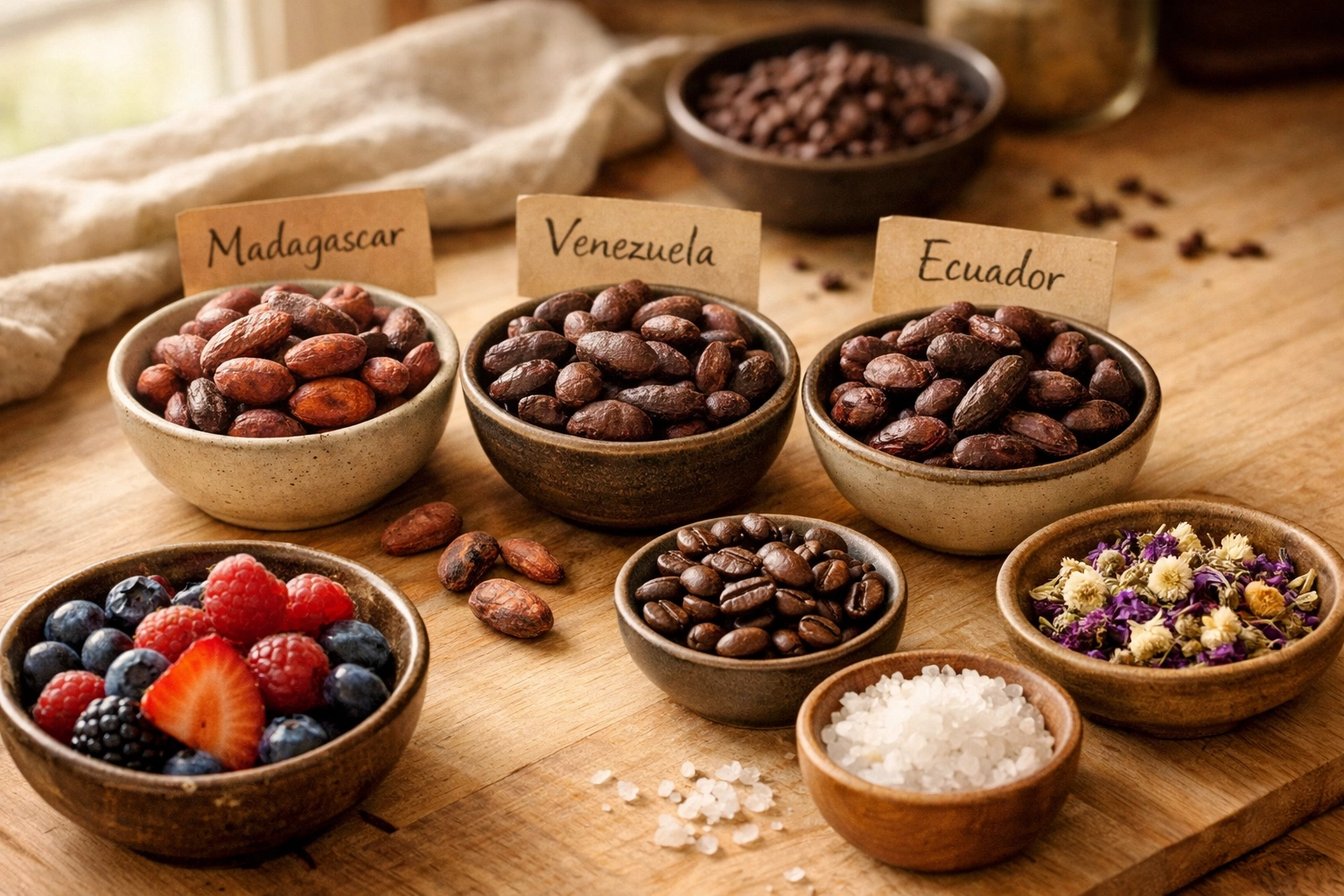
Madagascar beans? You've got bright, fruity, almost citrusy notes begging for complementary fruit pairings. Venezuelan cacao? That's your canvas for nutty, caramel-forward experimentation.
Visit the Chocolate Lab on Cocoa Craft and explore origin profiles that actually match your creative vision. Understanding your bean's personality is step one.
Step 2: Design for Texture, Not Just Taste
This is where 2026 makers are winning: multi-textural experiences.
A smooth 65% dark chocolate shell filled with crispy elements and creamy centers isn't just delicious, it's neurologically satisfying. Our brains crave textural contrast. The crunch-to-cream ratio matters as much as the cocoa percentage.
Are you thinking about inclusions? Filled centers? Layered experiences? Yes! That's the energy that's moving bars off shelves right now.
Step 3: Use the Formulation Tool Like a Pro
Here's where most makers get stuck: they have the creative vision but struggle with the technical execution.
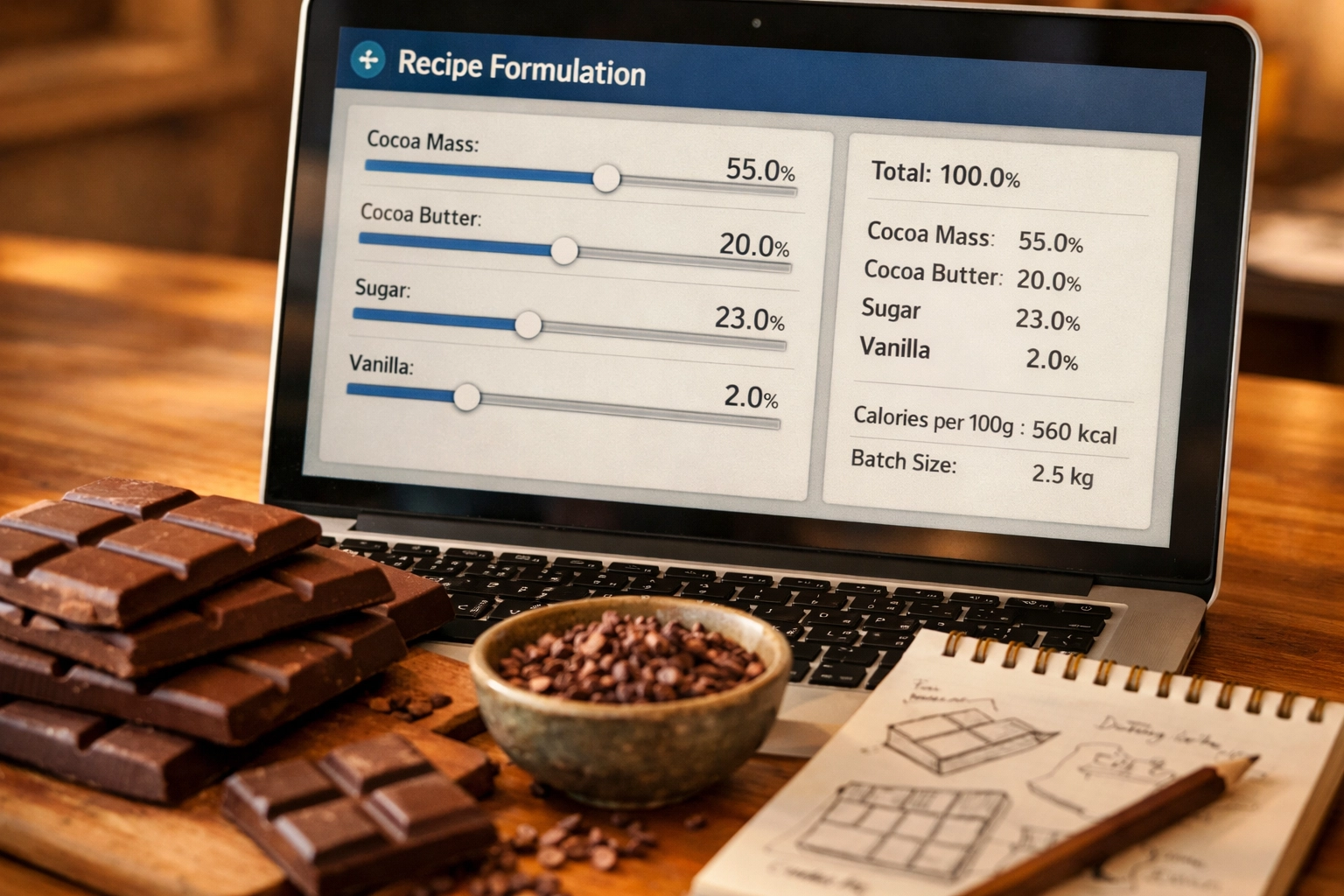
Sign up for a free Cocoa Craft account and access our Recipe Builder, it's designed specifically for this kind of experimental work. Want to see how a 62% bar changes when you swap Madagascar for Ecuador? Or how adding 2% sea salt affects mouthfeel and flavor perception?
The tool runs the math while you focus on the magic.
Step 4: Embrace Functional Wellness Trends
The 2026 consumer wants their chocolate to do double duty. High-protein options, plant-based innovations, and clean-label transparency aren't nice-to-haves anymore, they're table stakes.
But here's the secret: you can incorporate wellness without sacrificing craft. A 58% bar made with coconut sugar and pea protein can still showcase terroir and complexity. It just requires intentional formulation.
Our Formulation Tool helps you balance functional ingredients with flavor integrity. Because "healthy" chocolate that tastes like cardboard helps nobody.
The Bars Actually Winning Right Now
Let me paint you a picture of what's thriving in craft chocolate circles:
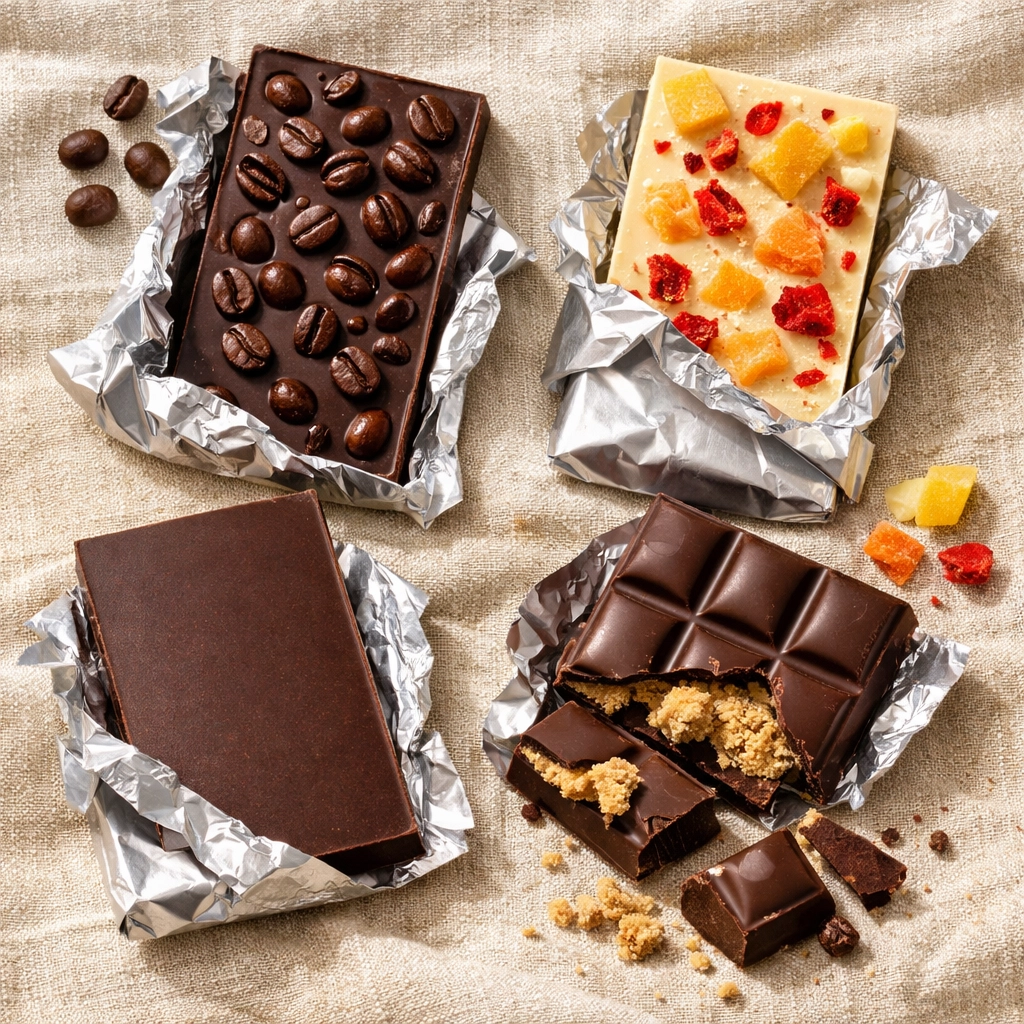
The Coffee Crossover: 68% dark chocolate infused with cold-brew arabica and subtle caramel notes. The cocoa percentage? Almost irrelevant. The experience of coffee-meets-cacao synergy? That's the seller.
The Tropics Explosion: 70% bars paired with passion fruit, guava, or mango that lean into the chocolate's natural fruit notes instead of fighting them. These aren't "flavored chocolates", they're amplified expressions of cacao's potential.
The Wellness Warrior: High-protein bars using recognizable ingredients that don't compromise on taste. Consumers want to feel good about their indulgence, and makers who deliver both ethics and flavor are crushing it.
The Filled Phenomenon: Following the Dubai bar's success, pistachio creams, halva centers, and crispy textural elements are everywhere. The percentage becomes background music when the filling is the symphony.
Your 2026 Chocolate Maker Mindset Shift
Stop asking "What percentage should I make?"
Start asking: "What experience am I creating?"
The makers winning in 2026 understand something fundamental: cocoa percentage is a technical specification, not a marketing strategy. It's important for recipe consistency and labeling compliance, sure. But it's not what makes someone pull out their credit card.
What does make them buy?
- A story about single-origin beans from a cooperative you visited
- A flavor combination they've never experienced before
- A texture that surprises and delights
- A bar that makes them feel something
You can achieve all of that at 58%, 64%, or 73%. The number is just the framework for the art.
Take Your Craft to the Next Level
Ready to move beyond percentage-obsessed chocolate making and join the 2026 revolution?
Create your free Cocoa Craft account and access our complete suite of maker tools:
- Recipe Builder: Experiment with flavor pairings and functional ingredients
- Chocolate Lab: Deep-dive into origin profiles and technical resources
- FactoryLink: Connect with other craft makers scaling their businesses
- Game Hub: Yes, we made chocolate-making fun: check out Hot Cocoa Rush when you need a creative break
The craft chocolate scene in 2026 isn't leaving anyone behind: it's just asking us to think bigger than the numbers on our labels.
Your 60% bar isn't dead. But maybe it's time to introduce it as "60% Ecuadorian chocolate with notes of red berries and honey, finished with Maldon sea salt" instead.
Same bar. Different story. Completely different market position.
Ready to rewrite your chocolate story? Log in or join Cocoa Craft today and start crafting bars that lead with passion, not percentages.
( The Cocoa Craft Team)