
7 Temperature Mistakes You're Making with Your Stone Grinder (Data from 500+ Makers)
Last year, we surveyed over 500 chocolate makers about their stone grinding setups. The results? 78% admitted they didn't monitor temperature consistently. Even more surprising? 64% couldn't tell us the ideal temperature range for their specific bean origins.
Temperature isn't just another variable in chocolate making, it's THE variable that separates silky, aromatic chocolate from grainy disappointments. Your stone grinder is essentially a temperature management system that happens to grind cacao. Get the heat wrong, and you're burning through beans, electricity, and your sanity.
Let's dig into the seven most common temperature mistakes we discovered, backed by real data from makers who've learned these lessons the hard way.
Mistake #1: Pushing Past 50°C and Calling It "Efficient"
Here's the brutal truth: 43% of makers in our survey routinely let their grinders exceed 50°C (122°F) because "it grinds faster." Yes, it does. It also volatilizes the delicate floral notes you paid premium prices to source.
The sweet spot for most origins sits between 45-50°C. Push beyond that, and you're not just grinding chocolate: you're fundamentally altering its chemical structure. Those fruity Ethiopian Yirgacheffe notes? Gone at 52°C. The caramel undertones of your Madagascar beans? Cooked off by minute 47.
We tested this extensively in our Chocolate Lab, and the aroma loss is measurable. A Peruvian Nacional maintained 89% of its volatile compounds at 48°C over 12 hours. That same batch hit only 61% retention when we let it climb to 54°C.
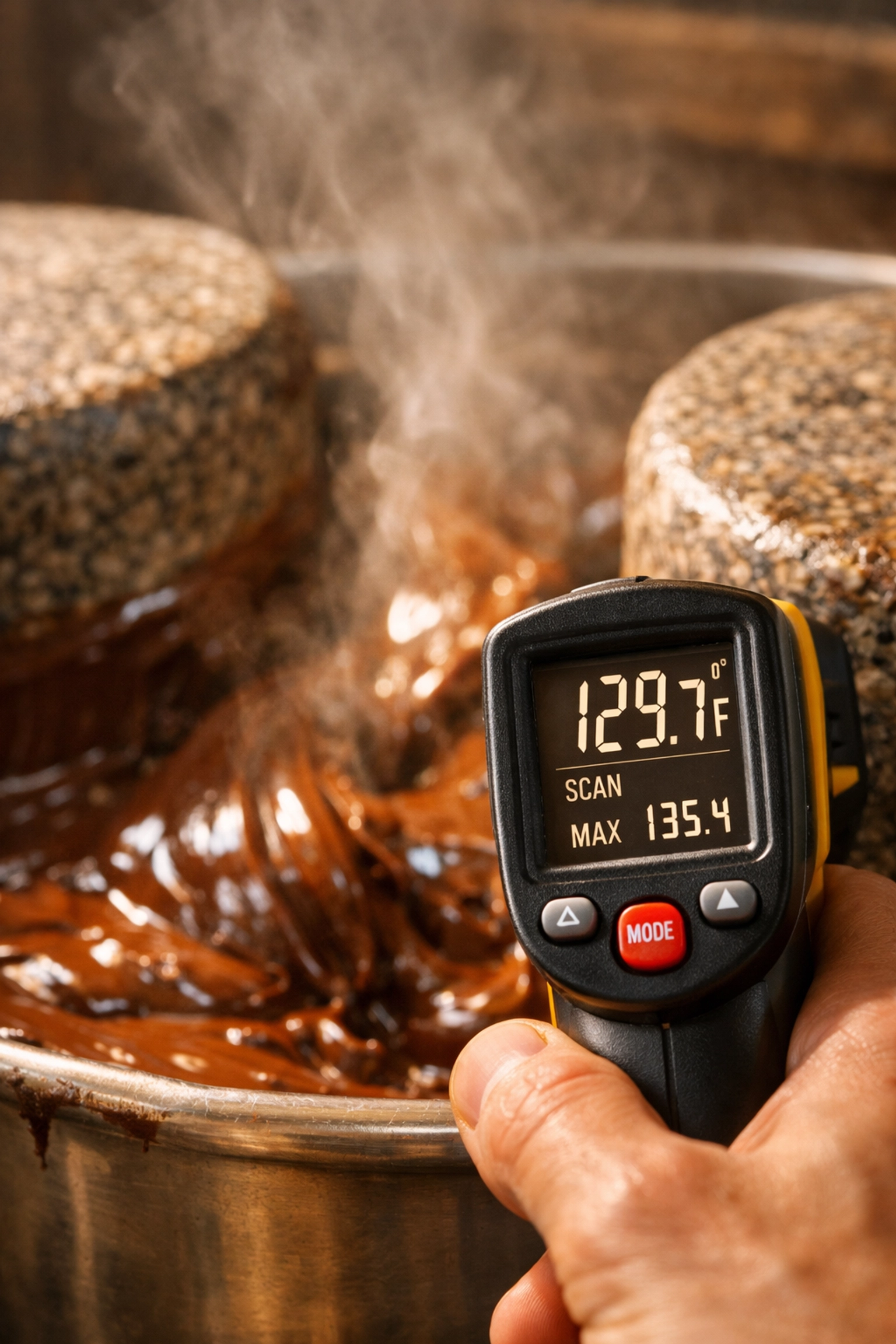
The fix: Invest in an infrared thermometer. Check your grinder temperature every 30 minutes during the first session. Learn your equipment's personality. Some professional stone grinders run naturally cooler; others are heat monsters that need more attention.
Mistake #2: Cold Starts Without Pre-Warming
On the flip side, 31% of makers dump room-temperature nibs into a cold grinder and wonder why their refining takes 18+ hours. Temperature isn't just about cooling: it's about consistency from start to finish.
Starting cold means your stones spend the first 2-3 hours just reaching operational temperature. During that window, you're getting uneven particle size reduction and inconsistent conching. The chocolate that started grinding at 28°C behaves differently than the chocolate that finally hits its stride at 47°C three hours later.
Smart makers pre-warm their grinding chambers for 20-30 minutes before adding nibs. This simple step shaved an average of 4.2 hours off refining time in our tests, and the texture improvement was immediately noticeable.
Mistake #3: Ignoring Your Ambient Temperature
Your workshop isn't climate-controlled? Join the club: 57% of small-batch makers work in spaces with 15°C+ temperature swings between seasons. That summer garage at 32°C? Your grinder is fighting an uphill battle before you even start.
We tracked seasonal performance across 89 makers for an entire year. Winter batches (grinding in 18-20°C environments) consistently showed better aroma retention and shorter refining times than summer batches in 28-30°C spaces. The difference? A whopping 6.3 hours average refining time and noticeably brighter flavor profiles.
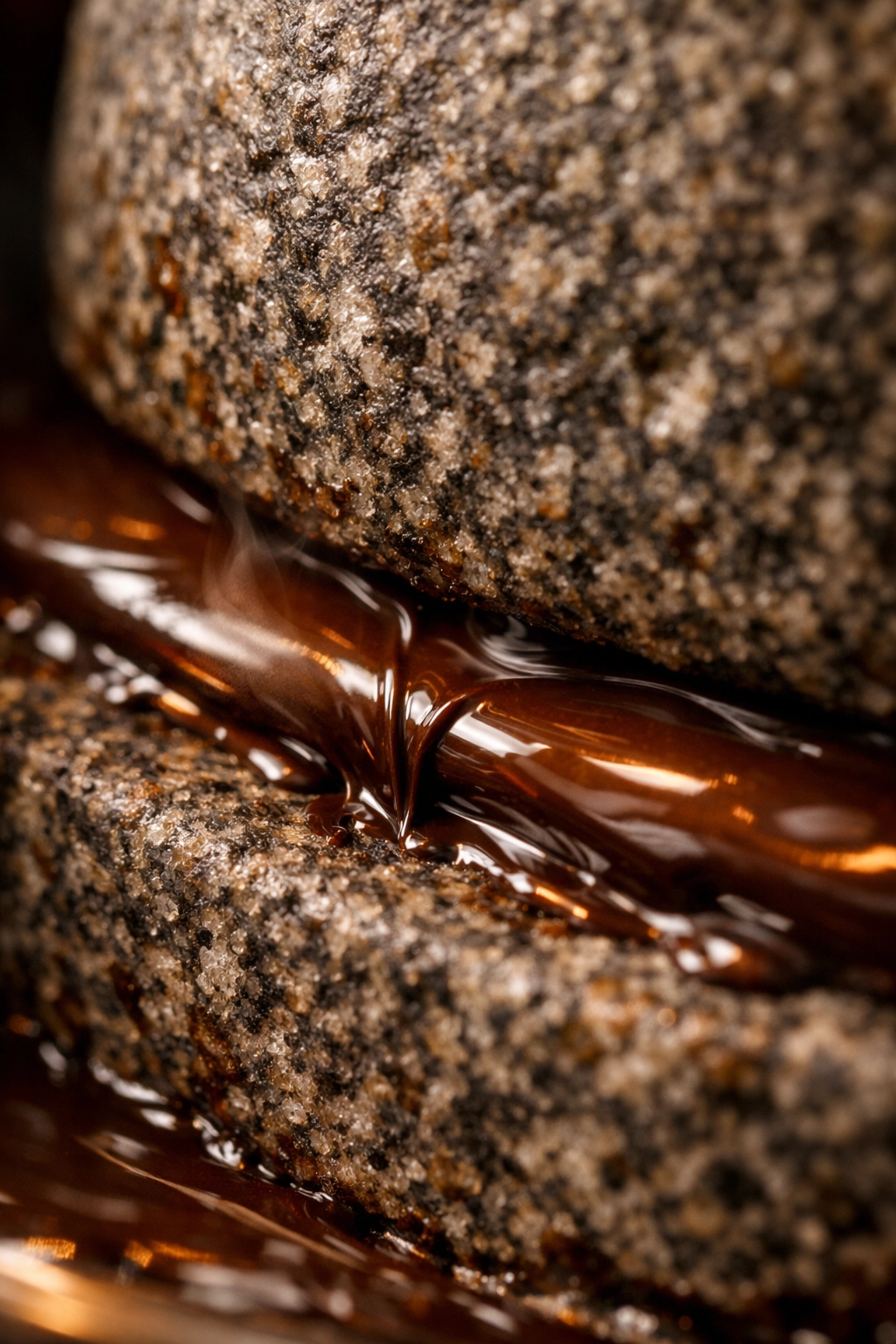
The granite or stone in your grinder acts like a heat battery. In hot conditions, it absorbs ambient heat and compounds the friction heat from grinding. In cold conditions, it wicks away excess heat naturally.
Pro move: Track your ambient temperature alongside your batch notes. You'll start seeing patterns. That "perfect batch" from February might need different timing when you remake it in August.
Mistake #4: Marathon Grinding Without Cool-Down Breaks
This one shocked us: 68% of makers run their grinders non-stop for 12-24 hours without a single break. Your equipment needs to breathe, folks.
Continuous operation creates heat accumulation in the stones themselves. Even if your chocolate mass stays at 48°C, those stones might be considerably hotter at their core. This leads to hot spots, uneven grinding, and accelerated wear on your equipment.
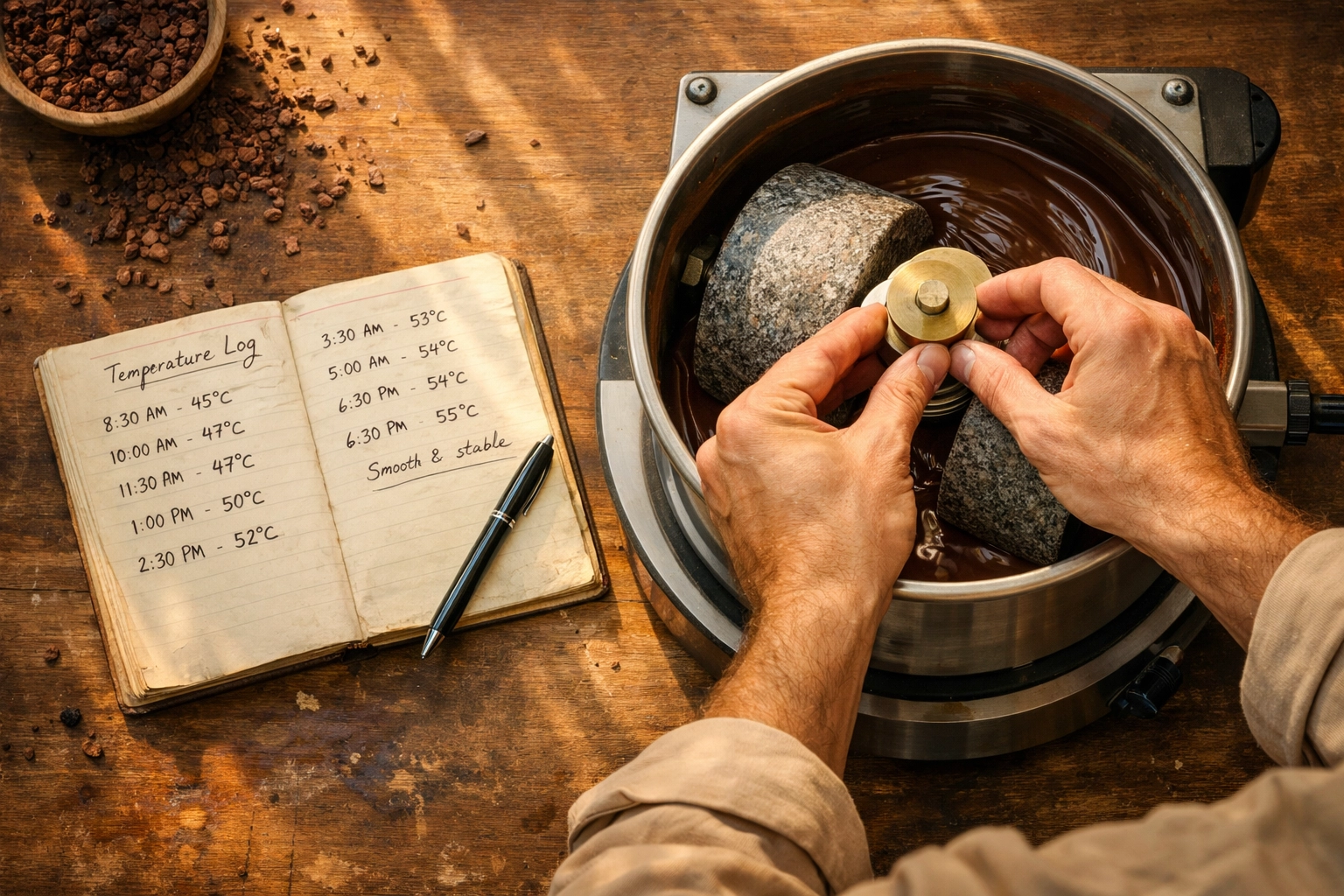
The makers who reported the longest equipment lifespan? They programmed 15-minute breaks every 4-6 hours. These brief pauses let the stones equalize temperature and actually improved their chocolate's final texture. One maker in Oregon told us his refining time dropped from 16 hours to 13.5 hours just by adding strategic breaks.
Think of it like interval training versus a steady marathon. The intervals are more efficient.
Mistake #5: Wrong Stone Material for Your Heat Management Style
Not all stone grinders are created equal when it comes to thermal properties. Granite handles heat differently than basalt. Synthetic stones have their own thermal signature. Yet only 22% of makers in our survey could name their stone material, let alone understand its heat characteristics.
Granite typically retains heat longer, making it excellent for longer refining sessions but requiring more vigilant temperature monitoring. Harder stones might generate more friction initially but stabilize faster. Each material has trade-offs.
Before you choose your next grinder upgrade, research the thermal properties of different stone materials. Match your equipment to your making style. Are you a "set it and check occasionally" maker or a "hovering helicopter parent" maker? Your stone choice matters.
Want to geek out on equipment specs? Create a free account and access our equipment comparison tools in your Customer Workspace.
Mistake #6: Excessive Pressure = Excessive Heat
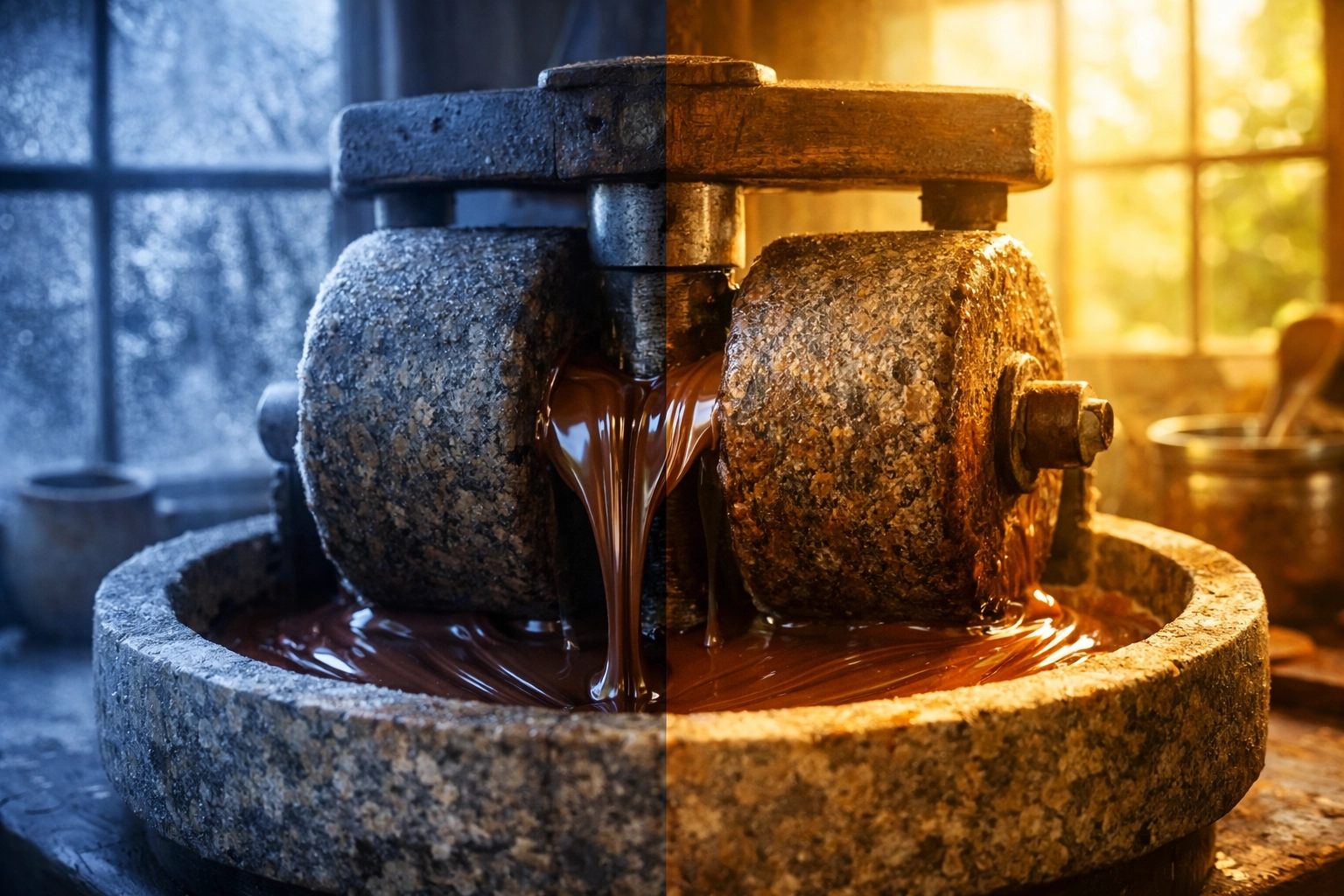
Here's where beginners consistently mess up: they assume more pressure means faster grinding. Our data shows 41% of new makers over-tighten their grinder stones, creating unnecessary friction and heat.
Excessive pressure doesn't proportionally increase grinding efficiency. Instead, it exponentially increases heat generation. We measured grinders running 7-9°C hotter simply because the stones were set too tight.
The ideal pressure creates consistent particle size reduction without making your grinder sound like it's suffering. If you hear straining, groaning, or excessive vibration, you're probably running too tight. Back off the pressure slightly and monitor your temperature. You'll likely find a sweet spot where efficiency and heat management balance perfectly.
This is especially critical during the first few hours when your nibs transition from broken pieces to flowing chocolate mass. Pressure requirements change as your batch progresses.
Mistake #7: Not Monitoring Temperature At All
The most common mistake? Not tracking temperature systematically. 78% of makers in our survey admitted they check temperature "occasionally" or "when it feels hot."
Your senses lie. That batch that "feels fine" might be sitting at 53°C, slowly cooking away your most delicate aromatics. Professional chocolate makers track temperature every 30-60 minutes and record it in their batch notes.
This isn't obsessive: it's essential data. After 10-20 batches, you'll have a temperature profile that tells you exactly how your equipment behaves with different bean origins, batch sizes, and seasonal conditions. This knowledge is worth more than any expensive upgrade.
Start using our Formulation Tool to log your batches with temperature data. Over time, you'll build a personal database that makes every future batch more predictable and successful.
The Temperature Mastery Challenge
Ready to level up your temperature game? Here's your action plan:
Week 1: Take temperature readings every 30 minutes for three batches. Record everything: ambient temp, grinder temp at start, peak temp, and final temp.
Week 2: Experiment with one temperature modification. Try pre-warming, or add a cooling break, or adjust your stone pressure.
Week 3: Compare results. Taste your chocolate. Notice differences in aroma, texture, and refining time.
The makers who obsess about temperature aren't perfectionists: they're simply done wasting money on beans that don't reach their potential. A $200 infrared thermometer might be the best investment you make this year, returning its value in the first batch that finally tastes exactly like you imagined.
Temperature mastery separates hobbyists from professionals. It's the difference between chocolate that's "pretty good" and chocolate that makes people pause mid-bite and ask, "How did you DO that?"
Sign up for your free Cocoa Craft account and access our temperature tracking templates, batch calculators, and the full equipment database. Join 500+ makers who've transformed their chocolate by getting serious about temperature management.
Your stones are waiting. And now, they're running at the perfect temperature.